Matrimoni ed eventi familiari
Sottocategoria

Roma Traveller documentary made with students from Henry Compton School.
Poetry by Valdemar Kalinin.

(15 Oct 2021) LEAD IN:
Hungary's "last" Roma fortune-teller fears his culture and traditions could disappear before his eyes.
Most traditional Roma occupations are very much on the wane. Many in Hungary face racism, segregation, social exclusion and poverty.
STORY-LINE:
Zoltan Sztojka, by his own account, is Hungary's last Roma fortune-teller.
In his home in the village of Soltvadkert, 120 kilometers south of Budapest, he lays 36 weathered paper cards upon a table and peers at them from beneath the brim of his large felt hat.
As he turns the cards face up with his heavily ringed fingers, he reveals to his clients - whom he calls "patients" - details of their past, present and future.
It's a skill of divination he says he inherited from an "unbroken family lineage" of fortune-tellers dating back to 1601.
"They were fortune-tellers and seers," Sztojka says of generations of his ancestors, who were "chosen by God" to practice the gift of fortune-telling.
"You have to born into such a family," he says.
Forty-seven-year-old Sztojka, whose friends and locals simply call "Zoli with the hat," has been practicing his trade for 25 years, but says his skills at seeing the unseeable were apparent even as a child.
He's a member of Hungary's large Roma minority, which some estimates place at as many as one million people in the Central European country, roughly ten percent of its population. Many face racism, segregation, social exclusion and poverty.
First migrating to Hungary in the 15th century, Roma were known historically for their skills as craftspeople and musicians.
They long spoke their own language and maintained numerous dialects and customs related to their trades - metalworkers, horse groomers and traders, musicians and fortune-tellers.
But in the mid-18th century, Habsburg empress Maria Theresa ordered the forced assimilation of the Roma, outlawing their nomadic way of life and the use of their language, Romani.
Roma children were removed from their homes and placed with non-Roma families, use of the Hungarian word for Gypsy - "cigány" - was also forbidden. They were dubbed "New Hungarians."
This and other processes of marginalization mean most Roma in Hungary are no longer able to speak the Romani language, and many of their traditional trades — like fortune-telling — were lost.
For Sztojka, preserving Roma culture goes beyond keeping the centuries-old art of fortune-telling alive. He dresses each day in brilliantly colored vests and shirts, and grows a traditional long, dark moustache.
A devout Catholic, he only removes his wide-brimmed hat, a trademark of the Gábor Roma clan of Transylvania, when attending mass at church.
"It's terribly important to preserve our culture and traditions, because if we don't have a culture, then the Gypsy community will cease to exist," he says.
Most traditional Roma occupations are very much on the wane.
"It is important to preserve and maintain them for the next generations," says Szilvia Szenasi, director of the Uccu Roma Informal Educational Foundation.
"Whether the oral legends or the traditional occupations are important for the new generations because it is through them that the Roma people can live their own identity."
Sztojka and his family belong to the Lovari subgroup of Roma, and still speak the Lovari dialect of the Romani language, something he says is "on the verge of extinction."
While in several cultures the word Gypsy is considered an offensive term, Sztojka prefers using it to Roma.
"My work is also a mission, and at the same time, it's how I can help my fellow human beings," he says.
Find out more about AP Archive: http://www.aparchive.com/HowWeWork
Twitter: https://twitter.com/AP_Archive
Facebook: https://www.facebook.com/APArchives
Instagram: https://www.instagram.com/APNews/
You can license this story through AP Archive: http://www.aparchive.com/metad....ata/youtube/ef2c78c6

Oct 11, 2012
Roma in New York
They are known by many names -- including "Gypsies" and "Travelers." But they favor the name Roma. They are among the most widely-spread and least-understood ethnic groups on earth.
Faith Lapidus looks at Romany culture and its influences in New York City. Thousands of the world's estimated twelve million Roma live in that city.
Romany music and celebration were heard and seen at the Drom nightclub recently. The club was the center of the three-week-long New York Gypsy Festival.
The festival presents the musical cultures of a people who moved north from India about a thousand years ago. They settled mainly in southern and eastern Europe, the Balkans and present-day Russia.
Producer Mehmet Dede says the festival is aimed at those who, like him, are "Gypsy at heart."
"I would like to think that in New York City we are all a little bit of Gypsy."
The Roma have been influenced by the lands in which they have lived. Similarly, New York City has been influenced by the immigrant groups that moved there, including the Roma.
Ismail Lumanovsky leads The New York Gypsy All Stars musical group. He sees himself as a cultural ambassador.
"By playing Romany music, I wanna offer the New York audience a very free way of looking at music...of expressing the feelings in the moment."
The Gypsy spirit seems to work for New York's downtown music scene.
"It's kinda' like a European blues."
"They can feel music. And they...you feel that they love playing."
Petra Gelbart teaches non-Roma the Romany language, dances and music. And she corrects misinformation.
"We're not nomadic for the most part. We are people who have been settled for hundreds of years or have certainly been trying to settle and get jobs."
Roma have long considered themselves outsiders. They have been treated as a dirty, dishonest people in many countries. Throughout history, Roma have experienced extreme discrimination.
Nazi forces murdered an estimated half-million Roma during World War Two. Today, anti-Roma violence is increasing in western and southern Europe.
Even in the United States, some Roma fear prejudice. Petra Gelbart's mother worked at a bank.
"She just wasn't gonna tell people that she's a Gypsy, because -- as she put it -- 'the minute something goes missing, who do you think they're gonna blame?'
Still, many New York Roma are proud to continue traditions Roma are known for, like fortune telling. Roma dancer Pirozhka Racz says despite globalization, there will always be Roma.
"Keeping the important things alive --- love and generosity, sharing with family, music and the other arts.

(5 Jul 2015) LEAD IN:
The Roma community in Hungary's capital is working to promote the richness of its culture and promote understanding of its traditions.
Roma volunteers are giving guided tours of their neighbourhood in Budapest, to help end marginalisation and discrimination.
STORY-LINE:
A gritty Budapest neighbourhood that has been compared to parts of New York City is hoping to attract visitors with a tour about its history and unique ethnic mix.
Known as Jozsefvaros (Joseph Town), Budapest's central 8th District is not typically featured in guidebooks.
The far side of the neighbourhood has been called the Bronx or Harlem of Budapest. Its ethnic mix is dominated by Roma but also features Turks, Chinese, Arabs, Africans and others in an ever-richer blend.
Roma volunteers from the Uccu Foundation (Roma Informal Education Foundation) provide weekly tours for foreigners and Hungarians, especially students who may not know this part of the city.
They're aiming to break down prejudices and stereotypes - something many Roma communities face across Europe.
Roma tour guide Andrea Ignacz, a student at the Central European University, says she, "Just wanted to show the people how Roma people are living here, the everyday life. Just a short look."
Ignacz speaks to foreign students about how some Hungarians avoid the area because "they are really afraid to come here".
The 90-minute tour includes a visit to a Roma violinist, who plays a piece mixing elements of Gypsy and Hungarian folk music, on his locally made violin.
The walking tour also goes via Matyas Square, which was a hub for street prostitution a decade ago.
At a memorial to Jewish residents killed in the Holocaust, Ignacz discuss the Roma genocide during World War II and the fact that in April 2015, the European Parliament voted to name 2nd August as the Roma Holocaust Memorial Day.
During the walk, participants get the chance to hear many stories of the Roma community and the differences within it.
"The best thing about this tour is that it's given by Roma to non-Roma," says Kaity O'Reilly, a student from Virginia in the USA.
"I think it's very important for a group to own their identity and spread their stories as their stories."
The neighbourhood hopes to benefit from Budapest's recent growth in tourism.
Hungary's capital city is now regularly featured in lists of the top 10 places to visit in post-communist Central Europe.
Jozsefvaros's glory is much faded. The palaces found in the area are not fully renovated and the art galleries are just a couple of rooms.
But the area's development has improved noticeably over the last decade, helped by the opening of a new subway line that runs through the district.
Find out more about AP Archive: http://www.aparchive.com/HowWeWork
Twitter: https://twitter.com/AP_Archive
Facebook: https://www.facebook.com/APArchives
Instagram: https://www.instagram.com/APNews/
You can license this story through AP Archive: http://www.aparchive.com/metad....ata/youtube/86dade94

This 3 minute video celebrates Traveller and Roma culture and the two groups coming together to share stories and common hopes and aims.

On New Year's Day, it will become easier for potential migrants from Eastern Europe to move around in the European Union. One country where they may end up is Britain. And many of them are likely to be from the Roma community, but that could raise tensions Al Jazeera's Laurence Lee reports from Sheffield.

The Romani people, often called "Gypsies," have a history full of travel and rich culture. This video looks at their story, going back to their beginnings in India and following their paths to Europe. Learn how the Sinti and Roma, two Romani groups, made their way across continents and the hard times they faced. We'll look at how they affected the places they lived in and how they keep their traditions alive today.
0:00 The Romani: A Journey Begins in India
1:26 Exiled by Empire: The Westward Migration
2:57 Byzantium: A Crossroads of Destiny
4:17 Diverging Paths: The Roma and Sinti
5:56 "Gypsies": Myths, Misconceptions, and Persecution
7:37 The Romani Soul: Music, Language, and Cultural Survival
9:14 The Porajmos: A Forgotten Genocide
10:49 The Fight Continues: Post-War Struggles and Resilience
12:22 A Global Movement: The Romani Rights Struggle
14:06 Celebrating Romani Triumphs: A Legacy of Resilience
https://linktr.ee/apolloshorts
🔔 Don't forget to subscribe and hit the bell to stay updated on our daily wisdom videos!
👍 If you enjoyed this video, give it a thumbs up and share the love!
#history #roma #romani #sinti #gypsy #europe #india #culture #travel #migration #nomads #people #forgottenhistory #documentary #storytime #didyouknow #interestingfacts #facts #travelvlog #traveltheworld #travelphotography #nomadic #explore #wanderlust #historyfacts #europeanhistory #indianhistory #worldhistory #ancienthistory #medievalhistory #culturaldiversity #heritage #tradition #music #language #art #dance #food #community #humanrights #equality #inclusion #justice #discrimination #prejudice #holocaust #porajmos #worldwarii #nazigermany #survival #resilience #identity #belonging #citizenship #globalcitizen #travelgram #instagood #photography #photooftheday #instadaily #beautiful #amazing #inspiration #life #love #peace #hope #knowledge #education #awareness #empathy #understanding #respect #tolerance #humanity #weareone #storytelling #storyteller #video #youtube #newvideo #mustwatch #checkitout #follow #like #comment #share #subscribe
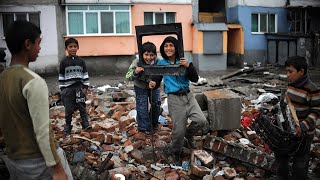

Dr Jodie Matthews co-curated an exhibition which was featured at the Treasures of the Brotherton Gallery in Leeds. The exhibition featured items from the Gypsy, Traveller and Roma Collections, owned by the University of Leeds. Dr Matthews explains why certain pieces were chosen to best demonstrate the ways in which the Gypsy way of life was romanticised by the media and says quite often the harsh realities, experienced by Romani Gypsies on a regular basis, were not portrayed.
April 10, 2017
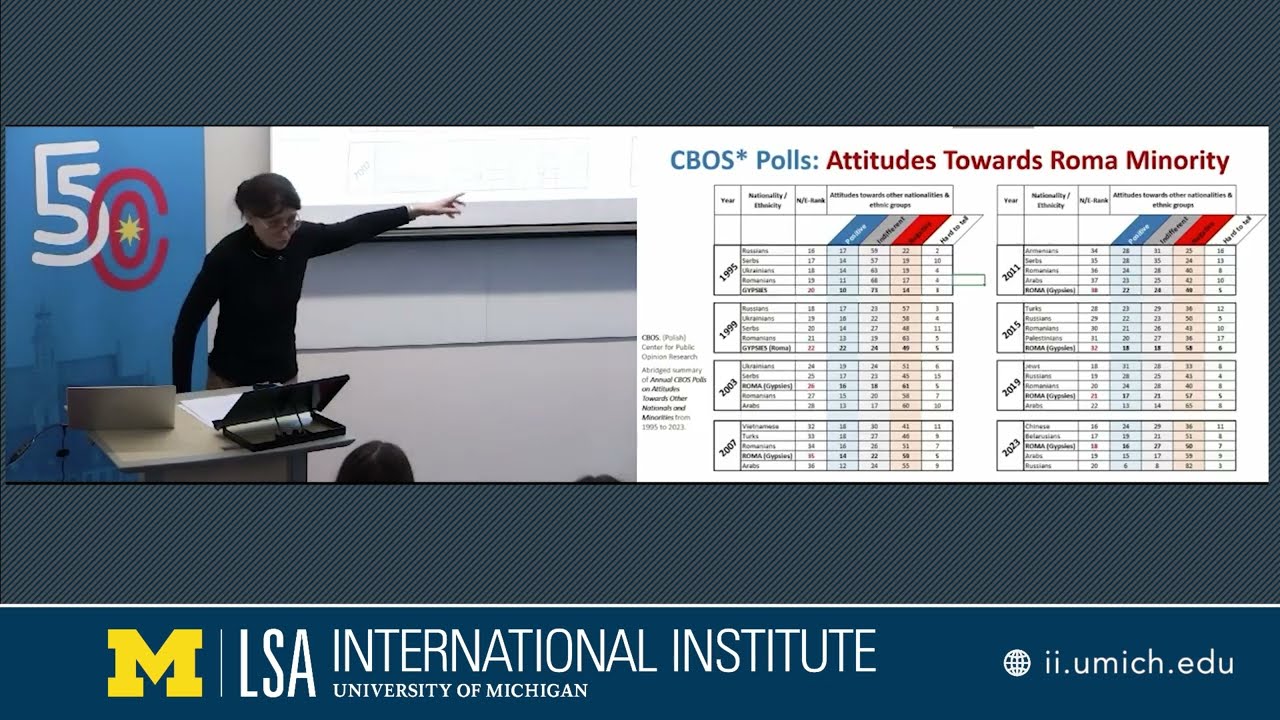
CCPS Lecture by Ewa Pasek, Ladislav Matějka Collegiate Lecturer of Polish & Czech studies, U-M. Sponsors: Copernicus Center for Polish Studies; Center for European Studies; Center for Russian, East European, and Eurasian Studies; Department of Slavic Languages and Literatures. Mar 14, 2024
This short video by A1 TV, also broadcast on CNN World View, shows a project by the OSCE Spillover Monitor Mission to Skopje and the NGO Sumnal to improve Roma education by helping young teachers to understand their culture. Used with permission of A1 TV.

(16 Dec 2021) LEAD IN:
A fashion studio in Hungary is challenging the centuries-old stereotypes faced by the country's Roma minority, and asserting a place at the table of high culture for the historically marginalised group.
The Romani Design fashion studio creates couture and jewelry inspired by the way of life of their community.
STORY-LINE:
Building the socio-cultural prestige of the Roma community.
That's the goal of sisters Helena and Erika Varga, who founded their fashion label in 2010, Romani Design.
By reestablishing Roma culture in a modern context, they're hoping to challenge the stereotypes affecting their community.
The Roma are Hungary's largest minority, and represent as much of 10% of the population in the Central European country.
Like their counterparts throughout Europe, Hungary's Roma are often the subjects of social and economic exclusion, and face discrimination, segregation and poverty.
Present in Hungary since the 15th century, many of the Roma's traditions are deeply ingrained in broader Hungarian culture.
Yet many of their unique customs and occupations — as well as their language, Romani — have been slowly dying out after centuries of official and unofficial marginalization.
Before starting Romani Design, the Varga sisters worked as jewelry makers and designers.
But seeing that the social acceptance long sought by their community had remained elusive, they worried that valuable Roma traditions were being lost, and excluded from conceptions of what constitutes high culture.
"We wanted to sensitise the social majority, including the social elite," says Erika Varga, owner of Romani Design fashion studio.
"This was important because it's the social elite that dictates who is valuable and what position they can occupy in the social hierarchy. We wanted to change the attitudes, we wanted to help. We also wanted to communicate messages to our own community that we don't have to give up our traditional values."
Reutilising the floral patterns, colourful fabrics and depictions of the Virgin Mary prevalent in traditional Roma dress and folklore, Romani Design creates modern clothing, jewelry and accessories that place Roma cultural traditions into a contemporary context.
Helena Varga, the younger of the sisters who oversees the design of their products, said many of the dresses and accessories are reflections on their own experiences growing up Roma in Hungary.
While some advocacy groups in Hungary push for Roma equality and social inclusion by representing elements of Roma culture like folk music and dance, the Varga sisters say that fashion is one of the most powerful means of bridging the gap between their culture and the rest of society.
"Fashion, the way we dress, the clothes we wear on our bodies can send a message so fast and so intense that it reaches its target audience very, very quickly," says Helena Varga.
What the sisters have found out is that their customers want meaningful clothing items.
"Our customers want more than only fashion," says Erika Varga.
"They don't just want to have a nice dress. They want to be able to express their personality as much as possible, to shape their immediate environment, and at the same time to represent values that are important in their personal lives and communities, such as the values of multiculturalism."
Six dresses by Romani Design are currently on display at an exhibition in the Museum of Applied Arts in Hungary's capital of Budapest.
The temporary exhibition, 'In Circulation', has artists choose items from the museum's permanent collection and create their own works inspired by them.
Find out more about AP Archive: http://www.aparchive.com/HowWeWork
Twitter: https://twitter.com/AP_Archive
Facebook: https://www.facebook.com/APArchives
Instagram: https://www.instagram.com/APNews/
You can license this story through AP Archive: http://www.aparchive.com/metad....ata/youtube/345827d1


(25 Jul 2014) LEADIN:
Hundreds of foreigners, many of them Japanese, are flooding to Turkey to learn Oriental and Romany dances.
Some Turkish travel agencies are organising trips that combine dance lessons and sightseeing activities around the country.
STORYLINE:
Megumi Masaki is a Japanese dancer who moved to Istanbul in January to learn belly dancing and the Turkish language and culture.
Masaki, who has taken the dance name of Milia, then jumped at the chance to travel to Edirne to learn Romany dance.
Edirne, a town near the Greek border is 149 miles (240 kilometres) west of Istanbul, has a thriving Roma culture.
Masaki started learning Middle Eastern dance styles five years ago in Japan and immediately got captivated by the culture.
She has since become interested in the Romany traditions.
The Roma arrived in Europe and the Middle East from India around the 14th century.
"I came to Turkey because I really wanted to learn more about Turkish and Romany dance inside the country", says Masaki.
American Lisa Kendrick, whose dance name is "Saroya", learnt about this course through a friend who visited last year.
Kendrick teaches belly dance in Atlanta, Georgia in the United States.
She was determined to join the tour when she found out that Ozgen, a Turkish Oriental and Romany choreographer based in the UK, was one of the teachers.
As the rest of the group, Kendrick is not only fascinated by the dance, but also by the local culture.
"Everything else in the world goes away", she says. "I have no worries, I have no problems, everything is wonderful when I dance. What I specifically love about the dances of the Middle East, Turkey, Egypt, Lebanon, Iran� I get to learn dance steps, but I also get to learn about a different culture."
Oriental Istanbul is one of the local tour operators that offer traveling combined with culture and belly dance lessons.
The company started operating in 2011, when their founders realised there was an increasing demand abroad for Turkish culture and dances.
Oriental Istanbul offers different cultural trips around the year, including activities like Turkish cuisine, Oriental, Dervish and Romany dance.
During the tour, the customers take lessons, enjoy the local cuisine and spirits and visit the most important monuments in town.
The groups are small, not exceeding 70 people, and many of them are Japanese, according to company staff.
"Usually we have clients from all around the world, including a lot of people from Asia, specially Japan. There is a big demand from Japan for Turkish belly dance", explains Burcu Kisakurek, one of the founding partners at Oriental Istanbul.
The customers usually travel first to Istanbul, where they enjoy some lessons and sightseeing activities, and afterwards to their final destination, in this case Edirne, where the Summer Roma festival is being held.
The tour fees range from 750 to 850 Euros ($1000 approx) for a 6 day tour, according to their staff, including lessons, accommodation and transportation.
Figures by the Turkish Statistical Institute show that in 2013 about 35 million foreigners visited Turkey, including almost 200,000 from East Asian countries, 87 per cent of them Japanese.
When the travellers finally join the Roma crowd in Edirne, the locals are amazed by their dancing skills.
Many Roma people want to take pictures with them and are curious about their knowledge of the Turkish culture.
One of the Oriental Istanbul founding partners is Yoko Gemba, from Japan.
She moved to Istanbul in 2007 where she began learning Oriental dances.
She began learning belly dance in Los Angeles in 2007.
Find out more about AP Archive: http://www.aparchive.com/HowWeWork
Twitter: https://twitter.com/AP_Archive
Facebook: https://www.facebook.com/APArchives
Instagram: https://www.instagram.com/APNews/
You can license this story through AP Archive: http://www.aparchive.com/metad....ata/youtube/0edefbeb
(26 Sep 2017) LEADIN:
Roma traditions are being kept alive thanks to an annual gathering at a hillside monastery in southern Romania.
Since communism ended, Roma have been coming to the monastery to celebrate the feast day of St. Mary, the mother of Jesus.
STORYLINE:
Hundreds of Gypsies get on their knees and kiss the relics of an Orthodox saint at a hillside monastery for their annual celebration of the birthday of St. Mary, the mother of Jesus.
Gypsies who are also known as Roma, worship at the 15th-century Bistrita monastery in southern Romania which holds the relics of St. Gregory.
First thing in the morning the Roma visit the tomb to pray for good health and a wealthy life in front of a sacred icon of St Mary. They kiss and touch the tomb in the belief they will receive a blessing. Others place money on a church icon or slip banknotes in the priest's prayer book.
Since communism ended, Roma have flocked to the monastery for the Sept. 8 religious holiday. Gregory who was born in the 8th century is associated with healing and is a protector from fire and drought.
The feast day has also been an occasion where Roma display their wealth and feast lavishly. Romania has more than 1 million Roma and many are poor and face prejudice.
This year's festival is more modest. Some at the festival say they are worried that the police might question their wealth if they show off too much.
After the service, Roma mingle on a hillside near the monastery and slaughter then roast suckling pigs and sheep. They dance and play traditional music loudly.
Some use the occasion to make wedding arrangements for their young sons and daughters. Roma witches perform special luck-bringing rituals they claim will help unmarried women find a husband and bring good health.
The festival is also an occasion for trade. Huge piles of second-hand clothes and electronic equipment are laid out for people to buy
Spartacus and his family come from southern-most Romania every year.
They sacrificed a young calf early this morning and now wait as it roasts over the fire.
"It is like a compulsory thing for us, the Romas in Romania, to come here on this holy day with all our family, meaning first of all children, brothers, sisters and after that comes the rest of the family, cousins and so on," says Spartacus.
"Romas come from various countries. Some of us haven't seen each other for years or tens of years."
Sitting next to Spartacus is his wife Mariana.
"This is our tradition given to us by our parents. They also were here like we are today. They are no longer with us now. But we keep on coming here every year. This is an international holiday for Romas."
Romani people make up Romania's largest minority and according to a 2011 census they number approximately three percent of the total population.
Mariana feels strongly about keeping Romani family traditions alive and hopes her children will continue in their footsteps.
"Our children, they learn from us now and from their grandparents in the past and they'll do the same in the future."
"Today we wear this scarf on our heads. Our kind have this cloth on our head, we don't really go out without it. This is also an old tradition. We don't go out with heads uncovered."
As the day goes on, more and more families arrive and set up their own cooking fires, dragging branches from the nearby woodland.
Celebrations continue into the night before people fall into their traditional Romani tents.
Find out more about AP Archive: http://www.aparchive.com/HowWeWork
Twitter: https://twitter.com/AP_Archive
Facebook: https://www.facebook.com/APArchives
Instagram: https://www.instagram.com/APNews/
You can license this story through AP Archive: http://www.aparchive.com/metad....ata/youtube/736d1251


Roma have been represented in a straightforward way as thieves, beggars, and criminals, and Roma feel that this is precisely the way how they should not be represented.
But after being pushed into the shadows for decades, a new generation of Roma artists is taking control of how Roma people are represented in Europe’s media, history, and culture.
Learn More: https://www.opensocietyfoundat....ions.org/voices/it-s

Read more: http://www.dw.com/en/anti-ziga....nism-in-focus-on-int
International Roma Day celebrates the culture of Roma and Sinti communities. But it's also for remembering that they still suffer discrimination. In Berlin, Roma and Sinti gathered at a memorial to members of their community murdered by the Nazis.


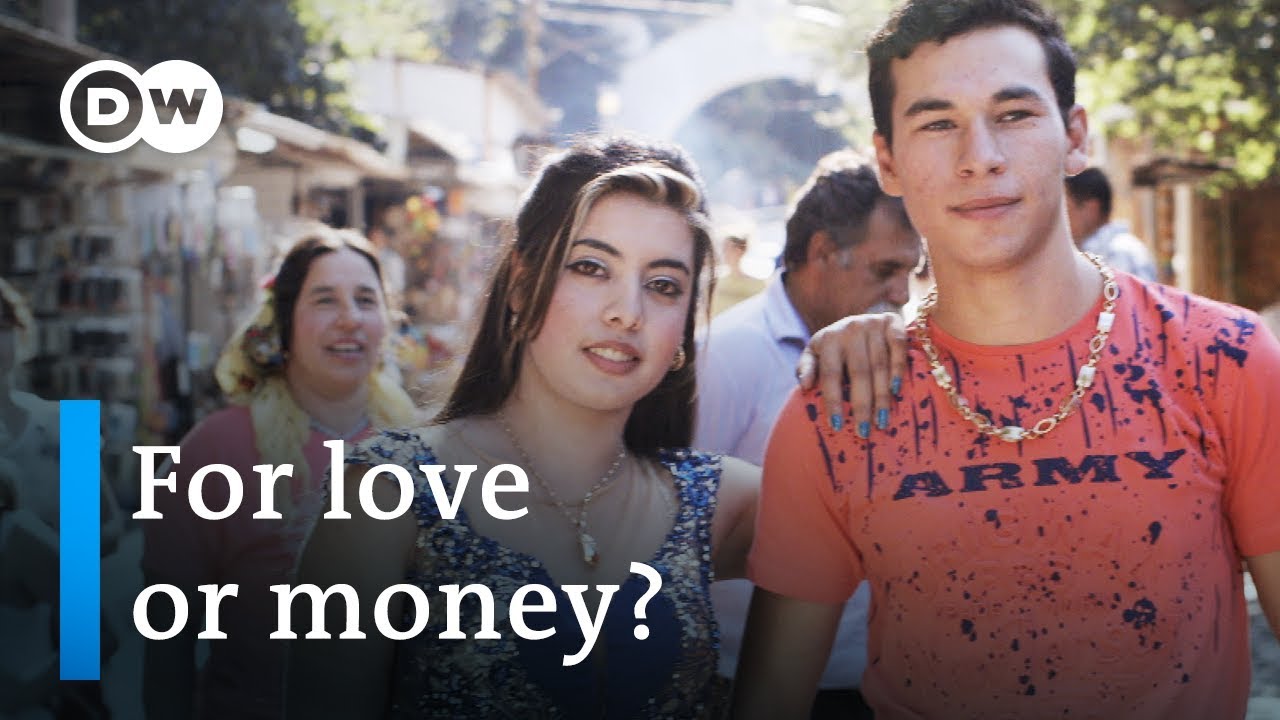
The Kalaidzhi bride market takes place in the southeast of Bulgaria every year. Unmarried women are often paired off with financially strong men.
But more and more young Roma are rebelling against the old tradition. For young Kalaidzhi the annual bride market at Bachkovo Monastery is the only chance to find a partner. Their Orthodox Christian faith and traditional code of conduct prohibit them from dating, flirting or having any other pre-marital relations. The Kalaidzhi - a name meaning tinsmiths or boilermakers - marry only within the group. Finding a spouse from outside - and in particular a non-Roma Bulgarian - is out of the question. Love is only a secondary consideration. What matters is the dowry. A growing number of young Roma, however, are rebelling against the traditional marriage market. They want to make their own decisions, and to love and marry the person of their choice. For girls especially - some as young as 15 when they are put up for marriage - the wedding is the end of self-determined life. They will subsequently be housewives and mothers. The film accompanies 17-year-old Teni and 19-year-old Maria in the week before the market day. For them it means buying a lot of new clothes and masses of other preparations. Can this be a way to find true love? And how is the outdated ritual affected by the Internet and social media?
_______
Exciting, powerful and informative – DW Documentary is always close to current affairs and international events. Our eclectic mix of award-winning films and reports take you straight to the heart of the story. Dive into different cultures, journey across distant lands, and discover the inner workings of modern-day life. Subscribe and explore the world around you – every day, one DW Documentary at a time.
Subscribe to DW Documentary:
https://www.youtube.com/dwdocu....mentary?sub_confirma
For more information visit:
http://www.dw.com/en/tv/docfilm/s-3610
Instagram
https://www.instagram.com/dwdocumentary/
Facebook:
https://www.facebook.com/dw.stories
DW netiquette policy: http://www.dw.com/en/dws-netiq....uette-policy/a-53009

Europe is home to 10-12 million Roma, yet many Europeans are unable to answer the basic question, “Who are the Roma?” The remarkable history of Gypsies, Roma, and Travellers in Europe, beginning over 1,000 years ago, tells a story of diversity, creativity, and survival.
To learn more about the Roma and Open Society, visit: http://www.opensocietyfoundations.org/topics/roma

Who are the Roma -- also colloquially called "Gypsies"? Where did they come from, and how did they end up all over Europe? How have they endured through persecution, expulsions, and political upheaval, without a state or country of their own? We trace the path of this remarkable and resilient people from their mysterious origins in India to their arrival in Constantinople and medieval Europe and through the wave of persecution and ethnic cleansing in the 1600s.
Please sign on as a patron at any level to hear part 2 -- tracing the journeys of the Roma through the revolutions and national awakenings of the 19th century, the Holocaust, and modern politics -- https://www.patreon.com/posts/51774522
Update: A contemporary historian, Kristina Richardson, has recently researched the lives and customs of the longstanding Romani group in medieval-era Egypt, commonly called the Ghuraba. It seems likely that at least one major Roma group that migrated into Europe, particularly western Europe, derived from the Ghuraba. One can see Richardson discussing her work in various places, including here: https://www.youtube.com/watch?v=ERSduCs3Afg
Image: Gypsies telling fortunes, in Cosmographie Universelle, Munster, 1552.
Suggested further reading: Angus Fraser, "The Gypsies"; Isabel Fonseca, "Bury Me Standing."
Please support this podcast and hear the recent lecture on the Founding Fathers! -- www.patreon.com/user?u=5530632

You can donate to Romaversitas here: https://romaversitas.hu/how-can-you-help/
Thumbnail by the illustrious Sol: https://www.instagram.com/soulaymaneart/
Check out my Patreon: https://www.patreon.com/adamsomething
Second channel: https://www.youtube.com/c/AdamSomethingElse
Images used (email me if yours is missing from the list):
https://unsplash.com/photos/LI7jB1925j0
https://unsplash.com/photos/At__EKm5PGE
https://unsplash.com/photos/ADSKIn0ScDg
https://commons.wikimedia.org/....wiki/File:Usti_nad_l
https://commons.wikimedia.org/....wiki/File:Brno_View_
https://en.wikipedia.org/wiki/....Gitanos#/media/File:

Every place we visit we find authentic culture. These dancers were a real treat to watch!
For more information, visit www.cobblestonefreeway.ca

The Roma are one of the most closed communities in France and also one of the most discriminated against. Despite making up barely 0.02% of the population, their encampments and way of life often provoke tensions and problems with neighbours. Five years ago, 800 Roma illegally settled in Prairie-de-Mauves on the outskirts of Nantes. We take a look at this veritable town-within-a-town, with its church, garage, bar and more than 100 caravans.
Living conditions throughout the camp are basic. Electricity comes from an illegal tap of a nearby power cable and is unstable and unsafe – earlier that year, one resident was electrocuted. Large families live in caravans or cobbled-together shacks. Many of the residents here work as fruit pickers in the surrounding area for the minimum wage, keeping the region’s farms running. Their wages support the rest of the community. Some turn to robberies and smuggling, where a few hours work can bring in the equivalent of a week’s minimum wage. The presence of this camp incites the anger of local residents, who blame them for all sorts of troubles: vandalism, burglaries and harassment.
Mosaic, in Tarn-et-Garonne, has an acute case of these problems. With a population of 30,000, this town – nicknamed the “Fruit Capital” – relies on a workforce made up of either Romanian or Bulgarian Roma workers to the tune of 85%. Moissac has the highest density of Roma in France. They represent 12% of Moissac’s population and, unlike Nantes, they live in the heart of the town, mostly in apartments. However, relations between the Roma and Moissac residents are becoming increasingly strained. The local police constabulary, administratively under the control of the National Rally in recent years, has its ear to the ground. The town council has installed surveillance cameras outside businesses run by members of the Roma community – an action the Roma consider excessive.
For three months of the year, during summer, the Roma return to Romania or Bulgaria, where their living conditions are much more stable. Back home, they own large houses, often characterised by flashy architecture. Tradition dictates that they build a home in their native villages for each of their sons. Come September, they all head back to France for work on the agricultural fields, where salaries are four times higher than at home.
-------
Bear witness to monumental moments in human history, and human's most terrible crimes. Java Witness is home to incredible stories of good and evil, from fascinating stories of old, to chilling documents of heinous murders and modern-day mafias and gangs.
From dinosaurs to medieval feasts, ancient wars and battles, through Kings and Queens, World Wars and critical world events, watch some of the best history documentary series, world history specials and more, all for FREE!
Hit SUBSCRIBE and enable the bell notifications to know first about all new documentaries on the channel! At least 2 FULL documentaries available to watch FREE online every week!
Subscribe to our Discover channel for more documentaries: https://www.youtube.com/c/JavaFilms/


The Romany Gypsy, Roma & Irish Traveller people are different ethnic groups with similar horrific histories. Based many in Europe, the three groups have strong identities, values and cultures. So what do these cultures look like when it comes to death and their funerals? In this video we look at who these groups are and how they do funerals.
#grt #gypsy #traveller #europe #culture #history #funeral #death #superstition #deatheducation #TabooEducation #death #didyouknow #funfacts
***SOCIALS***
FACEBOOK: https://www.facebook.com/TabooEducation/
INSTAGRAM: https://www.instagram.com/tabooeducation/
TIKTOK: tiktok.com/@tabooeducationyoutube
WEBSITE: tabooeducation.com
***LINKS & RESOURCES FROM THIS VIDEO***
Mentioned Taboo Education videos:
- Cultivation Theory & the Unethical Mess that isa Chicago Med: https://youtu.be/JAqBIpBFUEo
- Mourning vs Grief: https://youtu.be/cqx8AMXxKUY
- The Many Types of Grief: https://youtu.be/ywQ-WI6rxb4
Book:
"Gypsies, Roma and Travellers: A Contemporary Analysis" by Declan Henry. 2022, Critical Publishing.
Websites:
https://www.gypsy-traveller.or....g/wp-content/uploads
https://www.gypsy-traveller.or....g/wp-content/uploads
https://www.travellerstimes.or....g.uk/features/end-ro
https://www.theskyandearthknow.....com/p/the-roma-fune
https://media.nationalgeograph....ic.org/assets/file/r
https://rm.coe.int/from-india-....to-europe-factsheets
***Welcome to Taboo Education- Let’s Talk Death!***
Taboo Education is created by Sam (an Aussie psychotherapist) and Gary (your friendly neighbourhood ghost).
Taboo Education is a community education channel centred around the issues related to death and dying. We aim to create change in our healthcare system, legal system, and family dynamics by helping people start the death conversation with their families and themselves.
The channel covers death issues from all angles including historical, anthropological, biological, financial, environmental, and practical. We aim to provide both practical and thought-provoking videos in an often frank and humorous way in order to break the ice!

More info about travel to Romania: http://blog.ricksteves.com/blog/tag/romania Of Romania's many people, one group in particular has struggled to fit in: the Roma. Also known as "Gypsies," the Roma originated in India and were nomads who migrated over the centuries throughout eastern Europe.
At http://www.ricksteves.com, you'll find money-saving travel tips, small-group tours, guidebooks, TV shows, radio programs, podcasts, and more on this destination.

 English
 Dutch
Dutch French
 German
 Russian
 Spanish
 Turkish
 Croatian
 Italian
 Swedish
 Danish
 Greek
Greek Albanian
 Romanian
 Bulgarian