Familie & Gemeinschaft
Unterkategorie


Become a channel member:
https://www.youtube.com/channe....l/UC7e03AVnM07pcPG2Y
Follow me on twitch: https://www.twitch.tv/theplaymakerttv
Join my discord server: https://discord.gg/b9UkBy9aqB

This production is 1 of 16 Music Video's celebrating the vibrant Schools and Communities in the Maranoa District as part of the 'Roma Cluster - Small Town Culture' project.
The song is part of the 'Roma Cluster' iTunes Album to be launched at the 2015 Easter in the Country Festival in Roma.
Proudly supported by The University of Southern Queensland, Maranoa Regional Council RADF and Ed QLD RREAP Funding.

At around 13 million, Roma and Sinti are the largest ethnic minority in Europe. A new generation is currently conquering the cultural scene. Twist presents Selma Selman's art, which can be seen in Amsterdam. Malgorzata Mirga-Tas has designed the Polish pavilion at the Venice Biennale. And Lindy Larsson breaks down clichés in the opera Carmen at Berlin's Gorki Theatre.
Roma: Pride and Prejudice | ARTE.tv Culture
🗓 Available until 06/04/2026
ARTE.tv Culture is ARTE.tv’s English language hub for world culture 🌎. Here, we explore art 🖼️ from every angle, providing you with web series’ 💻, exclusive interviews 🎙️, music programmes 🎶, the best of European cinema 🎞️ and long-form culture documentaries 🎥.
Don't forget to subscribe so you don’t miss a video / @artetvculture
Want more? Visit our streaming platform in English 👉 https://www.arte.tv/en/
For reports on current affairs, geopolitics, economy, society, science and the environment, visit ARTE.tv Documentary 🌎 📺 https://www.youtube.com/@artetvdocumentary
Keep up to date with us on the go via social media 🤳
🐦 Twitter: https://x.com/ARTEen
👥 Facebook: https://www.facebook.com/ARTEenglish/
And subscribe to our newsletter 🗞️here: https://www.arte.tv/en/articles/newsletter
#artetvculture #romaculture #sinti

Easter is the most significant date on humanity’s calendar – because on this day Jesus Christ transformed our world with His resurrection. Yet despite Christians making up more than 31% of the world’s population and approximately 3 out of 4 Americans identifying as Christians, our faith is often marginalized and even ridiculed in today’s culture. Hollywood and today’s media are generally not supportive of faith values.
In this interview, Mark Burnett and Roma Downey will share about living out their faith in the public arena and in Hollywood. They’ll also share their passion to strengthen families through Bible-based content. Their latest project -- titled ”Resurrection” -- will be released on Discovery+ on March 27, 2021. It is a dramatic retelling of the resurrection of Jesus Christ.
Watch the trailer for "Resurrection": https://bit.ly/3ckbcUu
Get the booklet, Coming Home: https://bit.ly/3cmDmyr
For more resources on this topic: https://bit.ly/3rpsaFn
---
Check out Focus on the Family on social media!
Facebook: https://www.facebook.com/focusonthefamily
Twitter: https://twitter.com/FocusFamily
Instagram: https://www.instagram.com/focusonthefamily
Pinterest: https://www.pinterest.com/focusonthefamily
---
#FocusBroadcast #MarkBurnett #RomaDowney #ResurrectionMovie #ChristianFilmmakers #LivingOutYourFaithinToday'sCulture #FOTFBroadcast #FocusontheFamily

Keynote by Daniela Gress, titled: Insights “Without Romanticism”? Depictions of the Genocide of Sinti and Roma in West German Television Reports of the 1960s and 1970s. “Visibilities of Memory – The Representation of Sinti and Roma in Holocaust Film” (Heidelberg, November 2025)
The video is in German. Click the captions (cc) button for subtitles in English.
This video is part of an ongoing series of presentations from the conference Visibilities of Memory – The Representation of Sinti and Roma in Holocaust Film, bringing together international scholars and filmmakers to rethink visibility, representation, and cultural memory.Subscribe to follow the full series from the Critical Film & Image Hub.

Roma musicians and dancers from across Europe are performing in the Czech capital this week as part of the Khamoro Festival. The celebration of Roma, or Gypsy, culture hit the streets with a parade through Prague's Old Town, with performers from Macedonia, France, Turkey, and elsewhere. Produced by Margot Buff, RFE/RL

#romania #romaneighborhood #romaculture #lifeinromania #dailyvlog #easterneurope #romastories #travelvlog #streetstories #realromania
#frommorawithlove
🎶Music:https://www.epidemicsound.com
In this vlog I share my personal experience living in a Roma neighborhood that many people considered dangerous. But my experience was very different from what most people imagine.
I talk about the time when I rented a room from a Roma man named Marian and lived in an area many locals warned me about. Despite the reputation, nothing bad ever happened to me there. In this video I share a few stories from that time, including funny moments, cultural misunderstandings, and everyday life.
This is also a small daily vlog from my day in Romania – going to work, recording during my break in one of my favorite places near my workplace, and later spending some time with my son Karim.
Sometimes places that people fear the most turn out to be very different when you actually live there.
Thank you for watching and welcome to my channel.
💬 Share your thoughts in the comments. Do you think these discussions are important for understanding relations between nations?
👍 Don’t forget to like, subscribe, and share the video if you found it interesting!
📌 Follow the channel for more honest social discussions.

Roma inclusion has been a European priority for years – supported by governments, institutions and philanthropy. Yet the gap between commitments and lived reality remains wide.
In this interview, Kinga Rethy, Executive Vice President of the Roma Foundation for Europe, speaks about:
• why past approaches have failed to deliver systemic change
• the role of political will and long-term commitment
• moving beyond moral arguments to economic reality
• Roma inclusion as a response to Europe’s labour shortages
• the importance of Roma leadership and institutional strength
• what needs to happen next for real impact
The conversation also looks ahead and discusses the strategic priorities shaping the work of the Roma Foundation for Europe and its network.
Roma empowerment is not a niche issue. It is about Europe’s economic future, democratic resilience and social cohesion.
➡️ Learn more about our work: https://www.romaforeurope.org
00:00 Introduction
00:09 The gap between commitments and reality
00:42 Europe’s biggest mistake on Roma inclusion
01:34 Lip service vs real change
02:21 Missed opportunities and lack of political will
03:49 From moral arguments to economic reality
05:27 Proof of concept and real impact
06:16 Coordination across the network
09:39 Culture, identity and representation
10:13 Roma leadership at the top
16:00 Priorities for 2026
18:13 Economic argument and scalability
19:59 Future priorities for RFE
22:32 Political will and Europe’s future
24:00 Roma inclusion as a shared responsibility
25:10 Closing
#romaforeurope
#romainclusion
#roma
#europe
#publicpolicy
#socialpolicy
#democracy

They are Roma, rappers, and feminists, fighting male domination within their community and without through rap. Tracks meets girl band ‘Pretty Loud’, and rap-activist duo ‘Mindj Panther’ who are reinventing Roma culture mixing Balkan music and hip-hop.
Roma Rappers against the Patriarchy | ARTE.tv Culture
🗓 Available until 29/07/2027
ARTE.tv Culture is ARTE.tv’s English language hub for world culture 🌎. Here, we explore art 🖼️ from every angle, providing you with web series’ 💻, exclusive interviews 🎙️, music programmes 🎶, the best of European cinema 🎞️ and long-form culture documentaries 🎥.
Don't forget to subscribe so you don’t miss a video / @artetvculture
Want more? Visit our streaming platform in English 👉 https://www.arte.tv/en/
For reports on current affairs, geopolitics, economy, society, science and the environment, visit ARTE.tv Documentary 🌎 📺 https://www.youtube.com/@artetvdocumentary
Keep up to date with us on the go via social media 🤳
🐦 Twitter: https://x.com/ARTEen
👥 Facebook: https://www.facebook.com/ARTEenglish/
And subscribe to our newsletter 🗞️here: https://www.arte.tv/en/articles/newsletter
#artetvculture #balkanculture #rap
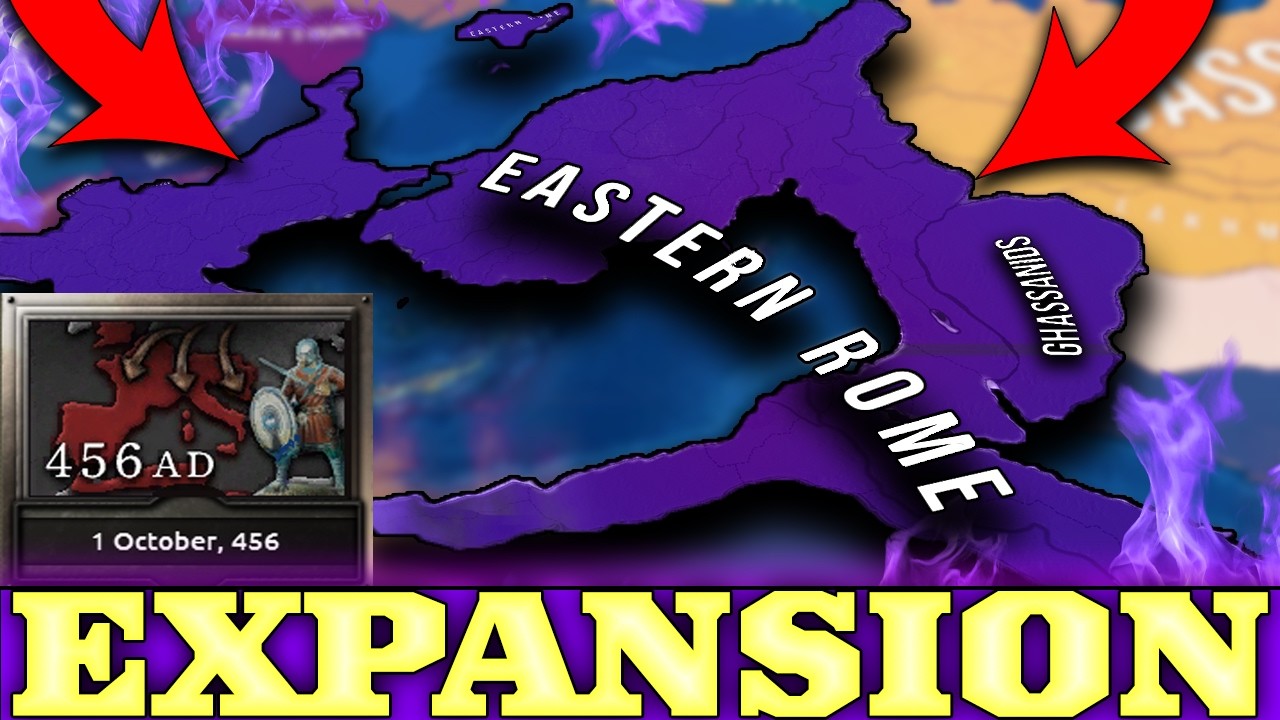
Welcome to the Second Hoi4 Fan Short Movie Of many I am making.
The Imperium Romanum of the west teeters on destruction, the Germanic Age of Migrations is in full swing as the Western Empire declines, but a general, promising of glory and the revival of the Romanitas who many call the Second Restitutor Orbis Valerian Majorianus rises the ranks of the Western Empire. Will Majorian be able to restore the Empire? Or will Ricimer's treachery and Visigothic destruction force Ravenna's collapse?
We are Playing as Eastern Rome Today (yes I did use some toolpacks to generate this scenario)
Mod: https://steamcommunity.com/sha....redfiles/filedetails
Discord: https://discord.gg/T3n95J6swt
Music Used (In Order):
https://youtu.be/W1oTwb-4jKE?si=QvuZXB-c5ld5SDPl
https://youtu.be/BFkPIhj1_VA?si=eyMNhUMLU7KH962e
(this is Sparta): https://youtu.be/xeBOkvDAzAg?si=f0tQY_9Ie-uA2AD0
https://youtu.be/VkeLkuFzPfM?si=c632A5fw4gqB8l8A
https://youtu.be/emeB83Q6P1I?si=rkK7LaF8BLkmKFnp
#hoi4, #heartsofiron4, #heartsofironiv, #italy, #paradoxinteractive, #romanempire, #roman, #spqr, #rome, #eastrome, #greece, #turkey, #strategy, #strategygames, #gameplay

Discover the untold history of the Nomads and the true origins of the Roma (Gypsy) people.
In this documentary-style video, we explore where the Roma people came from, how nomadic tribes shaped their identity, and what role they played in different civilizations across the world.
From ancient migration routes to cultural evolution, this video uncovers the forgotten journey of one of the most misunderstood communities in human history.
Learn about:
• The early origins of nomadic tribes
• The roots and global migration of the Roma (Gypsy) people
• Their culture, traditions, and survival
• How their identity changed over centuries
• Why their history remains hidden and misunderstood
Welcome to Mr Alyas Khakh Educational Channel!
Watch the latest scientific theories, new inventions and discoveries, history, historical documentaries, biographies and real-life documentaries, explained in a simple, easy-to-understand language and engaging way.
Don’t forget to like, comment, and subscribe — your feedback helps us improve and grow.
Watch Other Videos:
Worst Aviation Disaster in US History!: https://youtu.be/EOgV5ircjmI?si=Gt-sn1NwqJmQp-cK
Full Story of Prophet Saleh and Qaum e Samood: https://youtu.be/D8MFuz4gex8?si=2YIntMUx-p7Io6HS
Allah ne Hazrat Dawood ki qaum ko Bandar q banaya?: https://youtu.be/Fhkh-6Fpw9Y?si=4jcSDfpkEA0LfBWg
#Nomads #RomaPeople #GypsyHistory #AncientHistory #NomadicTribes #HistoryDocumentary #WorldHistory #HiddenHistory #Origins #HumanMigration


A powerful reinterpretation of “Ciocârlia”, the legendary Romanian virtuoso melody known for its lightning-fast violin runs and soaring energy.
This version fuses Gypsy jazz, heavy metal, and Balkan taraf traditions into a cinematic festival anthem. Virtuosic violin improvisations inspired by Ciocârlia meet distorted metal guitars, tribal drums, and fiery gypsy jazz rhythms. Traditional instruments like cimbalom, accordion, and wooden flute add authentic Eastern European color, while a continuous Roma women choir creates a haunting ritual atmosphere throughout the track.
The result is a wild musical journey blending folklore, metal power, and gypsy virtuosity into a modern, explosive sound.
🔥 Virtuosic violin
🔥 Gypsy jazz meets metal
🔥 Balkan taraf energy
🔥 Ritual choir atmosphere
If you enjoy Balkan music, folk metal, gypsy jazz, or experimental world fusion, this track brings them together in a unique high-energy performance.

🌟 A Tribute to Esma Redzepova: ""Caje Shukarije"" Performed by Jelena Tomasevic 🌟
🎵 With great honor, we present a heartfelt tribute to the late Esma Redzepova, the beloved queen of Roma music. This extraordinary tribute is performed by the renowned Serbian pop singer, Jelena Tomasevic. Jelena masterfully captures the essence and soul of Esma's iconic song ""Caje Shukarije"" during a memorable concert, allowing her powerful vocals and deep admiration for the legendary artist to shine through.
🎤 Esma Redzepova was a true trailblazer, defying societal norms in the 1950s when it was unconventional for women to perform publicly. Despite the challenges, she achieved immense success, leaving an indelible mark on the music industry and inspiring countless aspiring musicians. Her artistic legacy encompasses 20 albums, over 100 singles, 6 films, and more than 15,000 concerts, including over 2,000 humanitarian performances. It's as if she lived three lifetimes in one, impressing us with her extraordinary contributions. Her creativity emanates an elusive magic, a force we subconsciously feel but seldom comprehend. This is what sets Roma music apart, and it shines brightest in her most renowned song, ""Čaje šukarije,"" released on a single record in 1961 alongside ""Aber babi sokerdžan."" A lesser-known fact is that ""Čaje šukarije"" is not a traditional folk song, but a testament to Esma Redzepova's own authorship, showcasing her mastery of creation. ""Čaje šukarije"" is sung in the Roma language, evoking not only the richness of Roma tradition but also a connection to the Hindi language, both tracing their roots back to the ancient and profound Sanskrit. Esma's affinity for India, its origins, and traditions, remained a constant companion throughout her entire body of work, interwoven like a thread in the fabric of her artistic canvas.
💫 Beyond her remarkable musical achievements, Esma Redzepova was known for her boundless compassion and generosity. She selflessly adopted 47 children, providing them with love, care, and a nurturing environment. Esma dedicated herself to uplifting Roma women and supporting her local community in Skopje, making significant humanitarian contributions throughout her life.
🎶 Jelena Tomasevic's powerful rendition captures the timeless beauty of ""Caje Shukarije,"" a song that truly represents the vibrant essence of Roma music. With her remarkable vocal prowess and genuine admiration for Esma, Jelena ensures that the legacy of this legendary artist lives on.
🌟 Join the Movement, Subscribe to Our YouTube Channel! 🌟 Ignite your passion for music and culture: By subscribing to our YouTube channel, you'll gain access to a treasure trove of captivating performances, thought-provoking discussions, and inspiring stories from the world of music. Immerse yourself in a diverse tapestry of melodies and rhythms that celebrate the beauty of different cultures and artistic expressions.
✍️ Author and Music Director of the Roma: The Force of Nature: Bekir Haliti
🎼 Composition: Esma Redzepova
🎻 Arrangement: Bekir Haliti, Mehmethan Disbudak
🎧 Audio Mix and Post-Production: Mehmethan Disbudak
🎨 Visual Identity: European Roma Institute for Arts and Culture
🌟 Main Organizers of the concert:
Open Society Roma Initiatives Office
Opre Roma Serbia European Roma Institute for Arts and Culture
Roma Education Fund
Roma Entrepreneurship Development Initiative
Open Society Foundation Serbia
📚 Copyrights: Foundation, Roma, the Force of Nature #EsmaRedzepova #JelenaTomasevic #CajeShukarije #RomaMusic #Tribute #Trailblazer #RomaCulture #EnduringLegacy

Ratyani Khel (Night Dance)
A Ruska Roma song inspired by traditional Romani folk music, featuring expressive vocals, accordion melodies, and rhythmic guitar accompaniment in a lively Eastern European dance tempo.
The song evokes the atmosphere of a nighttime caravan celebration where music, firelight, and movement come together in a joyful expression of Roma culture.
Ideal for dance practice, choreography, and cultural exploration.
This track is part of Passport Rhythms — a music series from Global Dance Passport designed to support dancers exploring world dance traditions.

Romodrom, an advocacy group for Roma in the Czech Republic, allowed us to interview them about their organization and Roma culture. Petra Zahradníková, Anna Chválová, and Šárka Hofmannová were kind enough to reveal to us a rich culture almost unheard of in the United States.

Experience the night like never before. 🌃✨
"Cierhenia" is more than just a song; ❤️🎶it’s a vibe, a culture, and a cinematic journey.
🔥
Direct from the heart of the culture – Romanegila brings you the ultimate night anthem.
Connect with Romanegila:
🔗 Instagram: [https://www.instagram.com/roma....negila_music?igsh=MW
🔗 TikTok: [https://www.tiktok.com/@romanegila_youtube?_r=1&_t=ZG-94H7c7kCVfM]
#Romanegila #Cierhenia #Romanes #Roma #Romano #Gipsy #GypsyMusic #Sinti #Romani #InternationalMusic #UrbanVibes #WorldMusic #NewMusic2026 #RomanoVibe #RomaneGila #BalkanBeats #ModernEthno

Purchase: http://www.der.org/films/opre-roma.html This film celebrates the culture and struggle of the Gypsy. There is a new generation of Roma who claim their Gypsy roots with pride, while fighting the myths that caused their parents to live in fear. They call themselves by their rightful name, the Roma. The Roma people have suffered almost a thousand years of persecution - from European Slavery to the Holocaust - yet they have survived as a unique global culture. The film explores the music and culture borne out of centuries of exile. Opre Roma invites you to a wedding and to an evening of flamenco dance, with songs from Turkey, Romania, Spain, the Czech Republic and Slovakia that relate a shared experience telling the story of what it means to be Roma.
a film by Tony Papa
distributed by Documentary Educational Resources
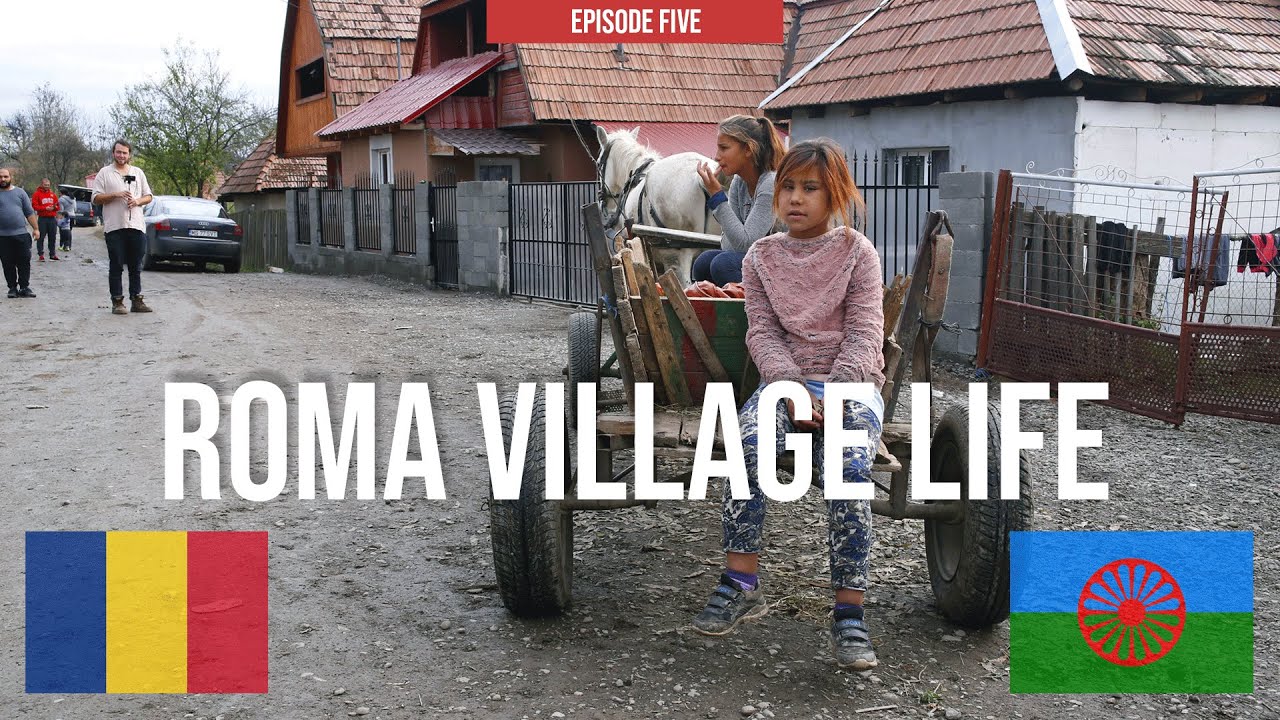
Ever wanted to immerse yourself in Romani culture and find out what goes on behind the doors of these often overlooked and stigmatised communities?
Chapters:
00:00 Intro
00:30 Abandoned Military Barracks
08:08 Entering Romania
09:50 Cluj Napoca food market
15:01 Gypsy village
⤖ Support our content ⬻
https://www.patreon.com/fromrusttoroadtrip
In our latest video we say our goodbyes in Hungary after an incredible time visiting Budapest, the capital city and Hortobagy National park where we stayed with a local Horseman and his wife. Before we leave, we delve in to an abandoned military barracks and try to reach the tower, but once inside, we find we aren't alone.
As we leave Hungary, the border station decide they aren't happy with our friends Canadian passport, and they hold us for investigation. Will ever leave?! Spoiler, yes we will. As we enter Romania, our memories of this beautifully crazy country come flooding back. We make a brief stopover in Cluj Napoca, the capital of the Transylvanian region of Romania.
As we enter the second half of the travelogue, we arrive at an old friends house. Tibi is from the Romani community in Romania, a separate ethnic group thought to originate from the Punjab region of India over 3000 years ago.
He warmly invites us in to his home where we eat a feast of traditional foods, before cranking the music up and introducing us to Romani music and dance. We explore the village, meet the locals, hear stories, learn traditional basket weaving from one of the villages oldest weavers and drink plenty of Rakia!
Join us as we experience authentic Roma life, from a completely honest viewpoint. Witness the effects social stigma plays in modern life for Romani people, and the warmth and hospitality the villagers display, despite the obvious language and social barriers.
If you’d like to know more about Romani life and would yourself like to visit the village of Serbia or Romani villages across Romania, please contact us for details.
We hope you enjoy and as usual, let us know what you think in the comments.
⤖ Follow our travels ⬻
Website - https://fromrusttoroadtrip.com
Instagram - https://www.instagram.com/fromrusttor...
Facebook - https://www.facebook.com/fromrusttoro...
Tumblr - https://fromrusttoroadtrip.tumblr.com
⤖ Our Kit ⬻
DJI Ronin S: http://tiny.cc/36yxfz
DJI Phantom 4 Pro+ : http://tiny.cc/3mzxfz
Canon 6D: http://tiny.cc/nx0xfz
Canon EF 70-200mm F2.8l IS USM lens: http://tiny.cc/d50xfz
Canon 50mm F1.8 SAF lens: http://tiny.cc/k80xfz
Sigma 24-70mm DG HSM lens: http://tiny.cc/wd1xfz
Sony RX100 M5: http://tiny.cc/4h1xfz
SanDisk Extreme Pro: http://tiny.cc/bt0xfz
Hoya polarising filter: http://tiny.cc/ds2xfz
Huwaei external battery: http://tiny.cc/v42xfz
Making a purchase through these links will help us to keep making videos by giving us a small percentage of the sale at no extra cost to you.
Tracks used & licenses:
'No Time' : Music by Liam Thomas
https://youtu.be/QVwZmQkJ6Sw
'Gypsy Dance' : Music by Topher Mohr and Alex Elena
https://www.youtube.com/watch?v=04iyyYOJCLc
‘Suspense Music - Post-apocalyptic’ : Music by CO.AG Music
https://youtu.be/i2DDyF4lE98
‘Longing’ : Music by Loop Faction
https://loopfaction.bandcamp.com/
‘Classic Romanian Music’ : Music by Bartok
https://youtu.be/ePtmf2EeRj4
I do not own the rights to the occasional non-descript background songs. No copyright infringement is intended.
A little about us...
We’re Lucy and Ben, two photographers from Cornwall, UK who’ve been living and travelling in our self-converted LDV Convoy camper van for the best part of four years. We’ve travelled all across Europe from West to East documenting our encounters with the people we meet as well as our own travels and adventures. We embrace the ethos of slow travel and minimal living, generally spending between 2 and 8 weeks in each country, getting to know each culture, cuisine and people as though we were locals ourselves as well as hiking, wild swimming and camping as we go.
We are currently on our third 7 month long road trip, travelling through the Balkans for the second time beginning in the French Alps and venturing as far East as Turkey, visiting 13 countries in between.
Our plan was simple: visit every country in Europe in our rusty tin can of a van. So far we’ve made it to 28 countries, travelling as far West as Portugal and as far East as Ukraine, having all sorts of crazy adventures in between.
Our main motivation for our travels is to capture photos and create documentary projects, so our van is primarily a vessel for our photography. We tend to focus on topics such as nomadism, traditional ways of life, the effects of recent political events and the difficulties of living in remote rural areas as well as documenting our own adventures and lifestyle on our various social channels.
#roma #romani #romania #gypsy #vanlife #travel

(25 Oct 2013) Roma artists from Hungary and across Europe on Thursday were finishing up a project to paint large murals on the outside walls of 33 homes in Bodavalenke, a small Hungarian settlement in one of the poorest regions in the country.
Many of the settlement's 200 residents live in deep poverty and 90-percent of them are gypsies, also known as Roma.
The project was designed to help the Roma take pride in their culture, to showcase their skills and to attract tourists to the area.
Some of the other paintings have been created by famous Roma artists from Serbia and Scotland.
"One aim was to fight prejudice by showing how much Roma culture enriches our common culture. We also wanted to help Bodvalenke rise out of deep poverty," said Eszter Pasztor, who organised the project.
She has been praised for her work by local basket weaver Jozsef Rusznyak.
"The village was not like this before, there was nothing here. Since Eszter arrived the village is beautiful and it has everything it needs."
Pasztor would love the project to get bigger.
"If we can get some more funding from other sources, I'd like very much to invite Gabi Jimenez from France, Lita Cabellut from Spain, Alberto Morelli from Italy and a few other artists," she said.
Find out more about AP Archive: http://www.aparchive.com/HowWeWork
Twitter: https://twitter.com/AP_Archive
Facebook: https://www.facebook.com/APArchives
Instagram: https://www.instagram.com/APNews/
You can license this story through AP Archive: http://www.aparchive.com/metad....ata/youtube/d2a2802e
Gypsy tradition and culture,Romske tradice a kultura,vse podlozene z bible...Odkud romove pochazi,najdeme predevsim v jejich tradicich a zvicich,prisly ze Stredniho vichodu, Jejich rec a a tradice ukazuji,ze jsou to potomci Zidu,proto trpi v tomto svete,stejne jako oni,viz 2 sv.valka !!!...add.Agape Bible chapl...love you pusa...

Brides for Sale ~ Inside Bulgaria’s Shocking Roma Marriage Market
#world #trending #GoesIndiaOfficial
©All Copyright (Audio/Photo/Video) Belong To Their Rightful Owners. We Just Edited & Published To Audience For Entertainment Purpose Only. If You Are An Outhor And Disturbed Your Copyright Infringement Please Contact Us, We Will Immediately Delete The Materials
Disclaimer: This Video We Just To Entertainment Viewers Don't Spread For Other Through The Content
Please Support
Copyright Disclaimer under section 107 of the Copyright Act 1976, allowance is made for "fairuse" for purposes such as criticism, comment, news reporting, teaching, scholarship, education and research. Fair use is a use permitted by copyright statute that might otherwise be
brides for sale bulgaria, brides for sold in bride market, buying love at bulgaria's roma bridal market, roma marriage market, marriage market bulgaria, brides for sale, brides for sold in bulgaria, the bride market in bulgaria, roma bride market, bride market bulgaria visa, bulgaria's bride market, bride market bulgaria, bulgaria bride market, bulgarian gypsy bride market, romani bride market, (hz) bulgaria bridal market, marriage market, marriage market documentary
roma marriage market, marriage market bulgaria, buying love at bulgaria's roma bridal market, marriage market, marriage market documentary, roma bride market, the bride market in bulgaria, bulgaria bride market, bride market bulgaria, bulgaria's bride market, bulgarian gypsy bride market, roma arranged marriage, romani bride market, bride market bulgaria visa, roma marriage season, (hz) bulgaria bridal market, romamarriagemarket, roma in bulgaria, bulgaria's roma, bulgaria roma culture, roma traditions bulgaria
dw
esposas por dinero
kalajdzii
mercado de novias
religion
romanies
tradicion

In Bulgaria there is a unique tradition often called the Roma bride market.
Once a year members of the Roma community gather in a large public square where families meet and discuss possible marriages.
Young women wear colorful dresses and jewelry while families socialize and introduce potential couples. For many participants this event is part of a long-standing cultural tradition passed down through generations.
In this video we explore one of the most unusual marriage traditions in Europe — the Roma bride market in Bulgaria.
0:00 — Introduction
0:02 — A story that sounds unbelievable
0:13 — A square filled with music and colorful dresses
0:27 — The Roma bride market in Bulgaria
0:42 — The annual gathering in Stara Zagora
0:58 — Why the phrase “bride market” sounds shocking
1:07 — What the tradition really means
1:24 — The origins of the custom
1:30 — Marriage traditions in Roma communities
1:43 — Special gatherings for young people to meet
1:50 — The event becomes a large social gathering
2:04 — Families preparing weeks in advance
2:12 — Why this day is important for young women
2:16 — Beautiful dresses and jewelry
2:33 — The square fills with people
2:40 — Families observing and starting conversations
2:45 — How introductions begin
3:02 — Conversations between families
3:09 — Discussing possible marriages
3:19 — Why the tradition looks unusual to outsiders
3:30 — The unique atmosphere of the event
3:33 — Music, children, and conversations
3:41 — Young women meeting potential partners
3:48 — Some meetings remain simple conversations
3:53 — Some become real marriages
3:56 — Understanding the cultural context
4:11 — Different opinions about the tradition today
4:18 — Tradition and family values
4:33 — Changing attitudes among younger generations
4:38 — Young people choosing partners independently
4:50 — How the role of the event is changing
4:56 — Some girls attend just for the experience
5:07 — A gathering that sometimes feels like a festival
5:13 — The tradition continues each year
5:21 — Families gathering every spring
5:32 — Why the event is more than a market
5:38 — A reflection of culture and community
5:49 — Different traditions around the world
6:02 — Why such stories are fascinating
6:17 — New stories beginning in the square
6:39 — Closing words
6:44 — Understanding Roma social structure
6:54 — Roma history in the Balkans
7:06 — The importance of family in Roma communities
7:12 — Marriage decisions involving the extended family
7:25 — The bride market as a family gathering
7:40 — Preparing for the event months in advance
7:46 — Dresses, jewelry, and celebration atmosphere
7:58 — Bright fabrics and festive style
8:09 — Girls arriving with friends and relatives
8:17 — Anticipation during the event
8:24 — Families searching for good matches
8:30 — Observing and starting conversations
8:38 — Casual questions between families
8:49 — Private discussions about marriage
9:02 — Traditional gifts from the groom’s family
9:16 — Why outsiders find the process surprising
9:24 — Decisions are not always immediate
9:36 — Couples getting to know each other
9:44 — The event as a place of introductions
9:52 — The unforgettable atmosphere of the gathering
9:56 — A square filled with hundreds of people
10:06 — Young women at a turning point in life
10:14 — For some, just a memory
10:18 — For others, the beginning of a family
10:21 — Debate about the tradition today
#Bulgaria
#RomaCulture
#BrideMarket
#WorldTraditions
#traveldocumentary

(25 Oct 2013) ROMA ARTISTS TAKE TO THE WALLS
Roma artists from Hungary and across Europe on Thursday (24 OCT) were finishing up a project to paint large murals on the outside walls of 33 homes in Bodavalenke, a small Hungarian settlement in one of the poorest regions in the country.
Many of the settlement's 200 residents live in deep poverty and 90-percent of them are gypsies, also known as Roma.
The project was designed to help the Roma take pride in their culture, to showcase their skills and to attract tourists to the area.
Some of the other paintings have been created by famous Roma artists from Serbia and Scotland.
"One aim was to fight prejudice by showing how much Roma culture enriches our common culture. We also wanted to help Bodvalenke rise out of deep poverty," said Eszter Pasztor, who organized the project.
She has been praised for her work by local basket weaver Jozsef Rusznyak.
"The village was not like this before, there was nothing here. Since Eszter arrived the village is beautiful and it has everything it needs."
Pasztor would love the project to get bigger.
"If we can get some more funding from other sources, I'd like very much to invite Gabi Jimenez from France, Lita Cabellut from Spain, Alberto Morelli from Italy and a few other artists," she said.
Find out more about AP Archive: http://www.aparchive.com/HowWeWork
Twitter: https://twitter.com/AP_Archive
Facebook: https://www.facebook.com/APArchives
Instagram: https://www.instagram.com/APNews/
You can license this story through AP Archive: http://www.aparchive.com/metad....ata/youtube/7860bb13
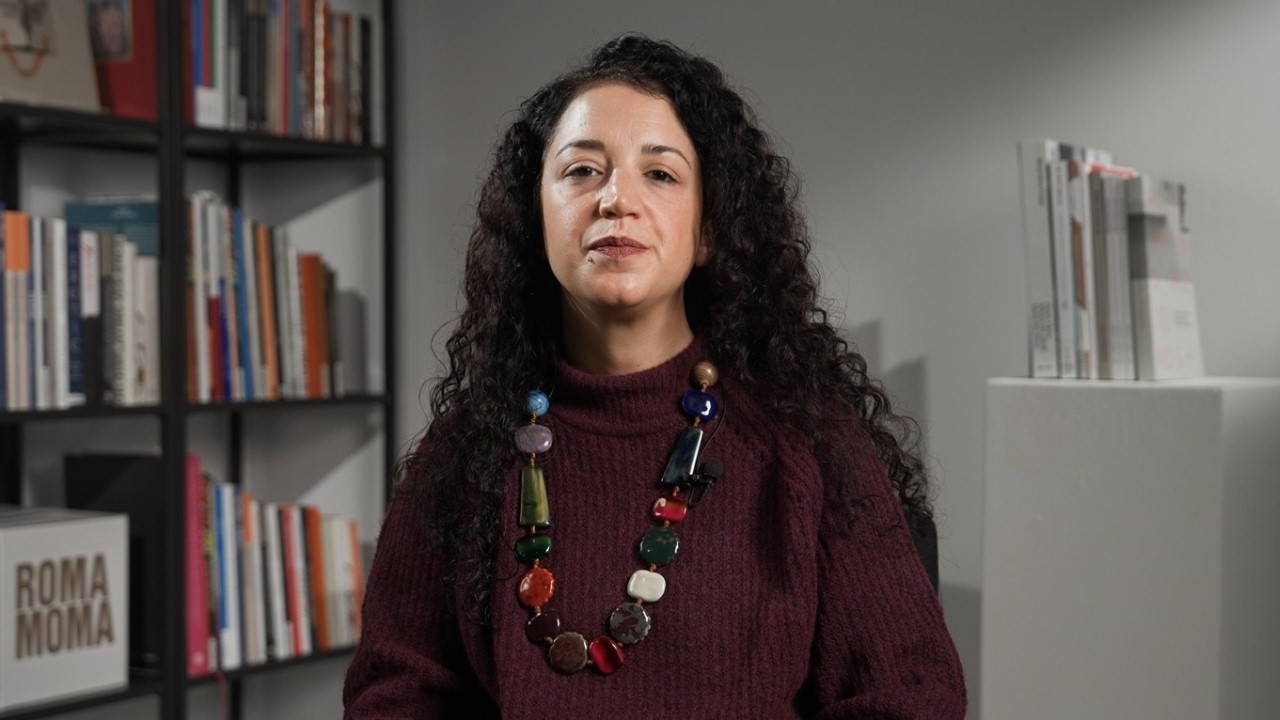
The European Roma Institute for Arts and Culture (ERIAC) is releasing the masterclass "Antigypsyism in Italy through the History of the Roma Civil Rights Movement" with anthropologist Federica Scrimieri, produced in the framework of the project Reclaiming Our Past, Rebuilding Our Future: New Approaches to Fighting Antigypsyism (JEKHIPE).
This masterclass analyzes Italian antigypsyism from the 1920s to the present, examining the systemic violence and institutional bias that have marginalized Roma and Sinti communities. Federica Scrimieri traces the evolution of Romani resistance, from early "pioneer" networks to modern "artivists" who use digital media to challenge dominant narratives. By examining artistic production as a site of memory and political agency, the masterclass illustrates how these cultural movements complement the ongoing intergenerational fight against entrenched structural inequalities in housing, education, and the social system.
*The masterclass is available with English and Romani subtitles. Please note that, due to a limitation in YouTube’s subtitle interface, the Romani subtitles are currently listed as Romanian.*
JEKHIPE is a European Commission-funded initiative (CERV) led by ERGO Network, ERIAC, and CEPS, in collaboration with national partners: Slovo 21 (Czechia), Central Council for German Sinti and Roma (Germany), UCRI and Romni (Italy), Amare Romentza (Romania), FAGiC and Romane Siklovne (Spain), and Trajosko Drom (Sweden).
Together, these organizations address historical injustices, such as the lack of recognition for the Roma Holocaust and slavery, while promoting institutional representation in arts and education. By engaging policy-makers and grassroots communities, JEKHIPE seeks to contribute to the establishing of clear mechanisms for governmental accountability across Europe.
#JEKHIPE #ReclaimingOurPast #RebuildingOurFuture #CERV #FightingAntigypsyism #RomaRights #HistoricalJustice

Thousands of Roma women in Slovakia were sterilized without their consent. In Roma culture, large families are a sign of wealth and happiness. The government has since apologized, but the victims are demanding compensation.
For more news go to: http://www.dw.com/en/
Follow DW on social media:
►Instagram: https://www.instagram.com/dwnews
►TikTok: https://www.tiktok.com/@dwnews
►Facebook: https://www.facebook.com/deutschewellenews/
►Twitter: https://twitter.com/dwnews
Für Videos in deutscher Sprache besuchen Sie: https://www.youtube.com/dwdeutsch
Subscribe: https://www.youtube.com/user/d....eutschewelleenglish?
#slovakia #roma #sterilization

In this film, Richard O’Neill and Juice Vamosi discuss the rich history of the Romani and Roma people, exploring the connections between their linked but distinct heritage. Originating in India, the story of their roots takes us through the middle east and North Africa to contemporary Europe and Britain - and for Richard and Juice, to the North of England.
To celebrate Gypsy, Roma, Traveller History Month and to launch our Gypsy Jam series, Richard and Juice bring to life the rich musical traditions of the Romani and Roma cultures and present a jam session using acoustic instruments and shared music-making practices.
The film launches a large-scale partnership project between Oldham Coliseum Theatre and Roma-led charity, Kaskosan, which aims to support Roma people in Oldham and provide a platform for new Gypsy, Roma and Traveller talent.
Learn more about Gypsy Jam at: https://www.coliseum.org.uk/ge....t-involved/community
Every June since 2008, people from across the UK have celebrated Gypsy, Roma and Traveller History Month. Through celebration, education and raising awareness, Gypsy, Roma and Traveller History Month helps to tackle prejudice, challenge myths and to amplify the voices of Gypsies, Roma and Travellers in wider society.
This year, the theme for Gypsy, Roma and Traveller History Month is ‘Make Some Space’, encouraging people across the UK to ‘Make Some Space’ for Gypsy, Roma and Traveller people in their day to day lives.
Download the participation pack and resource from Friends, Families and Travellers to learn more: https://www.gypsy-traveller.org/

Dr. Ian Hancock speaks at the Petaluma Museum Association, in association with the Voice of Roma, as part of the exhibit 'Roma - Crossing the Borders', an exhibit of history, art, music, food, and culture, emphasizing the positive contributions of the Romani community, as well as providing insights into a little known culture that is often misunderstood.
Featuring the art of Xylena Apotholoz and Tina Burbank, without whom, the exhibit would not have been possible.
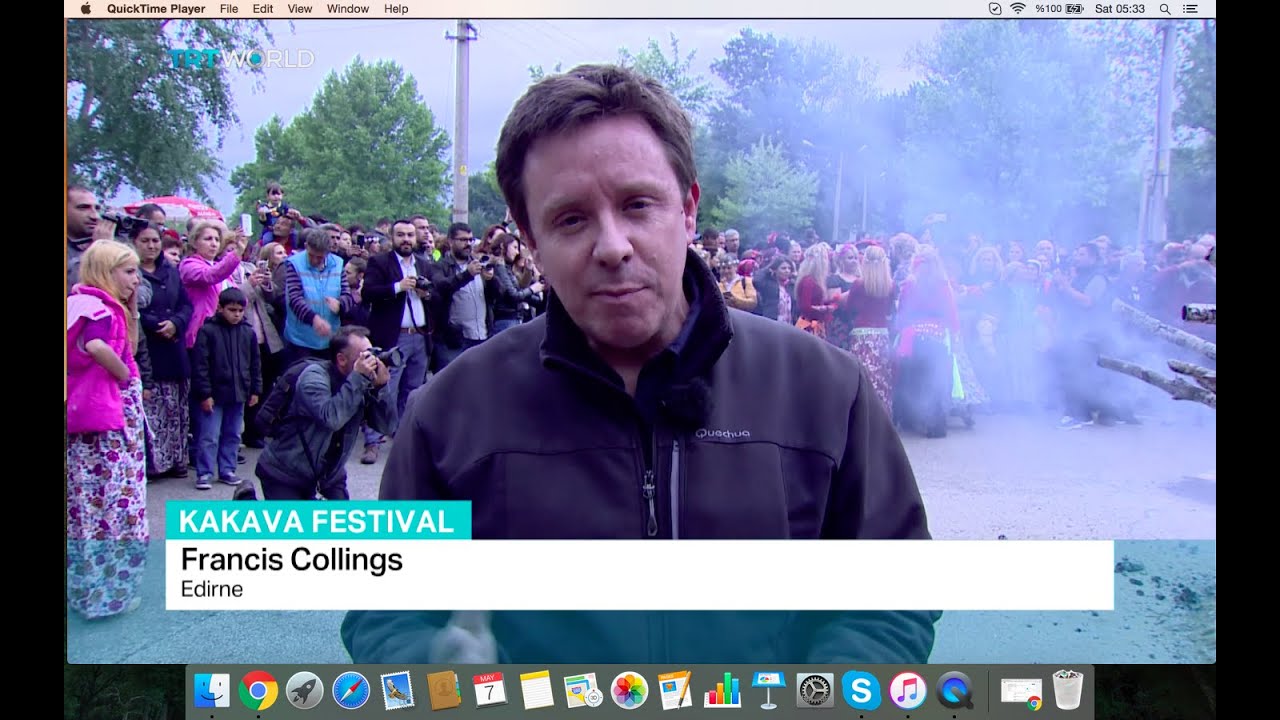

CNN documentary on the Roma comunity in Romania

Explore the annual tradition of the Kalaidzhi Roma clan in Stara Zagora, Bulgaria, where controversy surrounds the bride market. Young virgins are presented to potential suitors who bid on them, making it a focal point for Bulgaria's 18,000-strong Kalaidzhi community. Despite facing ongoing prejudice in Europe, the Kalaidzhi cling to their heritage, with the bride market representing one of their few remaining traditions.
Taking place in southeastern Bulgaria, the Kalaidzhi bride market sees young girls matched with boys coming from financially stable families. However, an increasing number of young Roma are challenging this age-old practice. For them, the annual market offers the sole opportunity to find a partner due to their Orthodox Christian beliefs and strict adherence to traditional values, which prohibit pre-marital relationships. Marriage within the group is essential, ruling out any possibility of marrying outside the Roma community, particularly non-Roma Bulgarians.
While dowry remains a significant factor in these arranged marriages, a growing segment of young Roma are pushing back against this traditional system. They aspire to make their own choices in love and marriage, opposing the notion of being bartered off at a young age, often as young as 14. For these girls, marriage signifies the end of autonomy, as they transition into roles as housewives and mothers, highlighting the clash between tradition and modernity within the Kalaidzhi community.
Credits
––––––––––––––––––––––––––––––
Adventures by A Himitsu https://soundcloud.com/a-himitsu
Creative Commons — Attribution 3.0 Unported— CC BY 3.0
Free Download / Stream: http://bit.ly/2Pj0MtT
Music released by Argofox https://youtu.be/8BXNwnxaVQE
Music promoted by Audio Library https://youtu.be/MkNeIUgNPQ8
––––––––––––––––––––––––––––––
Chapters
––––––––––––––––––––––––––––––
0:00 Introduction
1:41 Is my wife for sale?
2:28 Young, and most importantly, virgin
5:25 Kalaidzhi trade and price of the girls
9:18 Stealing the girl or taking a loan from the bank
12:27 Changing the tradition
13:51 Families fighting over old feuds
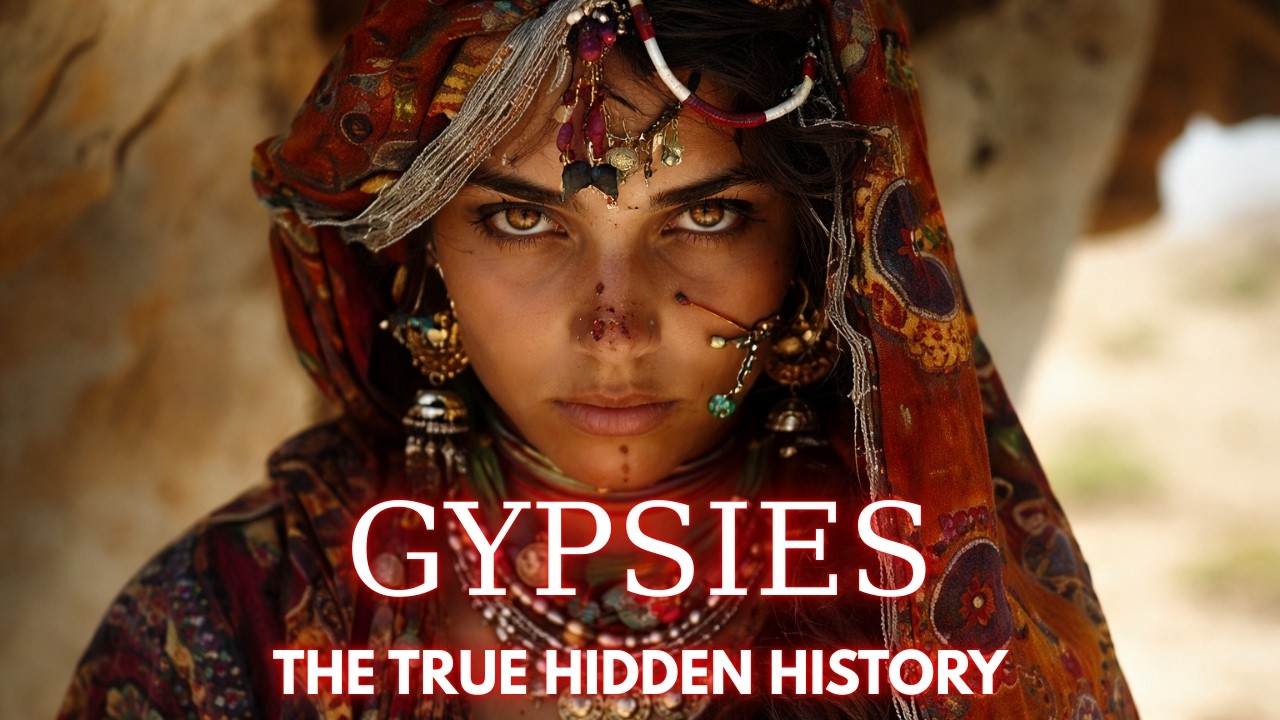
In this documentary-style episode, we explore the true hidden history of Gypsies (Roma)—where the journey began, how the migration unfolded across continents, and why their story has so often been misunderstood, misrepresented, or reduced to stereotypes.
You’ll learn about:
The origins and early migrations of the Roma people
How language, music, crafts, and community traditions helped Roma identity survive
Why persecution and discrimination shaped the way Roma history was recorded
The difference between myths vs documented history
How to speak about Roma history with accuracy and respect
We also examine how ancient manuscript cultures preserved identity and memory over centuries—drawing a careful comparison to the ethiopian bible tradition as an example of how communities protect texts, heritage, and continuity. While the ethiopian bible is not “Roma history,” it offers a useful lens for understanding how long-lived traditions endure. This is why the ethiopian bible is sometimes mentioned in broader conversations about preservation, cultural survival, and historical memory—much like the way the ethiopian bible survived through dedicated communities. In that sense, the ethiopian bible becomes a reminder that history is often kept alive by ordinary people guarding what matters. And just as the ethiopian bible endured, so did Roma identity—despite centuries of pressure.
👉 LIKE this video if you value respectful, research-driven history.
👉 SUBSCRIBE for more documentaries on hidden history, ancient cultures, and forgotten timelines.
💬 Comment below: What part of Roma history do you think the world most misunderstands?
#RomaHistory #Gypsies #HiddenHistory #HistoryDocumentary #CulturalHistory #RomaPeople #EuropeanHistory #UntoldStories #Documentary #DeepHistory
Important Notice (AI-Generated Content): This video is created with AI and includes dramatized reconstructions and illustrative visuals for storytelling and educational analysis. Some scenes, voices, characters, and settings may be simulated or fictionalized and should not be treated as real footage or direct evidence. The video may discuss hypotheses and interpretations; viewers are encouraged to cross-check claims with primary sources and reputable scholarship before forming conclusions.

Logline: “A Roma couple has a wedding that combines cultural and religious traditions and celebrates virginity, love and fertility.”
Synopsis: There are many stories about how Gypsies steal or buy their brides. But for one couple in the Roma neighborhood in Blagoevgrad, their wedding is a chance to celebrate their 5 years of dating with a mix of Indian, Roma and Western traditions. We follow Filka and Rumen over the course of their 3-day wedding as the bride talks about getting checked for virginity, being dabbed in henna and even the importance she places on a church ceremony. In this intimate look into a Roma wedding, we get a rare glimpse of gypsy life.
Credits: Directed, shot and edited: Heidi Pullyard and Dimitria Vitanova.
This short documentary was produced as part of the Documentary Moviemaking class thought by Melody Gilbert at the American University in Bulgaria in the fall semester of 2014.
SUBSCRIBE for more videos by our awesome students!
Get yourself some more JMC!
Website - http://www.jmc-aubg.com
Facebook - http://www.facebook.com/JMCAUBG
Twitter - @JMCatAUBG
Google+ - http://plus.google.com/106532044442997871167
Journalism and Mass Communication (JMC) is one of the 10 majors that the American University in Bulgaria (AUBG) offers. There's more than one reason why AUBG is a great choice for those who want to study JMC.
American University in Bulgaria - http://www.aubg.edu

In Hungary, discrimination against Roma people goes deep with 40% of Roma living below the poverty line and young people in the community often dropping out of school. The Ambedkar high school, run by headmaster Tibor Derdak tries to help Roma children who would otherwise fall through the cracks in the system.
Hungary - A Roma High School | ARTE.tv Documentary
📆 Available until: 25/03/2028
ARTE.tv Documentary 📺 is ARTE.tv's YouTube channel in English, where we share new videos every day, including in-depth documentaries and reports on geopolitics, economy, society, culture, science and the environment 🌎.
Want more? 👉 Visit our streaming platform in English: ARTE.tv in English https://www.arte.tv/en/
For reports on culture, visit ARTE.tv Culture, where we explore art 🖼️ from every angle. Here you’ll find web series’💻, exclusive interviews 🎙️, music programmes 🎶, the best of European cinema 🎞️ and long-form culture documentaries 🎥: https://www.youtube.com/@artetvculture/
Don't forget to subscribe so you don’t miss a video / @artetvdocumentary
Keep up to date with us on the go via social media 🤳
🐦 Twitter: https://x.com/ARTEen
👥 Facebook: https://www.facebook.com/ARTEenglish/
And subscribe to our newsletter 🗞️here: https://www.arte.tv/en/articles/newsletter
#artetvdocumentary #hungary #romaculture
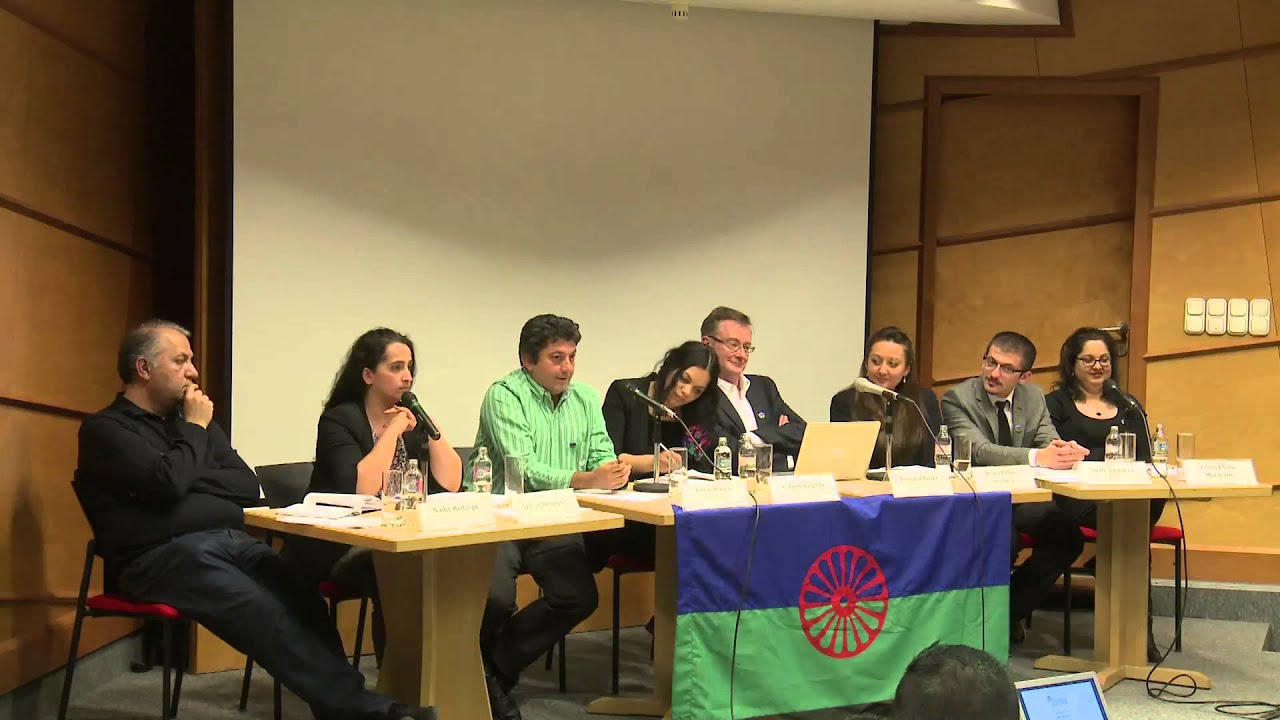
In the last two decades, the Roma issue turned to be considerably frequent research topic, attracting the attention of various researchers, policy-making experts, public institutions and international organizations, which greatly shaped the public discourse on Roma. However, the overall discourse and awareness on Roma situation, often presents a “curious consensus on who the Roma are and typically reinforcing stereotypes” (Surdu, 2014). The results and effects of academic products are not only confined in the field of research, but also in scientific analysis. Evidently, academic thought is logically connected and affects many other spheres of social life, i.e. politics, economy, culture, and broader social relations, including public opinion. The purpose and objective of this event is to open once again debate and look at:
a. Diverse approaches and experiences apropos emerging national and European policies for Roma inclusion vis-à-vis
b. Aspirations for representation and contribution of Roma in the academic circles.
Referring upon the legitimate participation principle “Nothing for us, without us”, Roma intellectuals are often questioning the added value and relevance of academic research and policy advice. Taking into consideration the increased access of Roma students (facilitated by different programs and scholarship), which results in new generation of Roma MA and PhD students, the question of representation of Roma in academia yet remains. This discussion tackle the following questions: Does the existing research on Roma reinforce the stereotype image of Roma or produce new knowledge? How Roma contribute to the Academia and what is the importance of having Roma in Academia? How Universities can facilitate the access of Roma in Academia?

According to some estimates, 11 million people worldwide consider themselves of the ethnic group known as "Roma." In Colombia the Roma are trying to preserve their culture and traditions as they make their home there. CGTN's Michelle Begue reports from Bogota.
Watch CGTN LIVE on your computer, tablet or mobile
http://america.cgtn.com/livenews
Subscribe to CGTN America on YouTube
Follow CGTN America:
Twitter: @cgtnamerica
Facebook: @cgtnamerica
Google+: CctvamericaTvnews
»» Watch CGTN ««
Washington, DC (and greater area)
• MHz - Channel 3
• COMCAST (Xfinity) - Channel 273
• FIOS - Channel 277
New York City
• Time Warner - Channel 134
• FiOS (Verizon) - Channel 277
Los Angeles
• Charter Cable - Channel 562
• Time Warner - Channel 155
Satellite Nationwide
• DISH TV - Channel 279

In the dense woods of Latvia, Roma families reflect on their identity and traditions by sharing ghost stories. "I felt someone breathing on my back," one man says. “It was as if I’d stumbled into another world." Read more: https://www.theatlantic.com/vi....deo/index/607222/blu
"Blueberry Spirits" was directed by Astra Zoldnere. It is part of The Atlantic Selects, an online showcase of short documentaries from independent creators, curated by The Atlantic.
Subscribe to The Atlantic on YouTube: http://bit.ly/subAtlanticYT
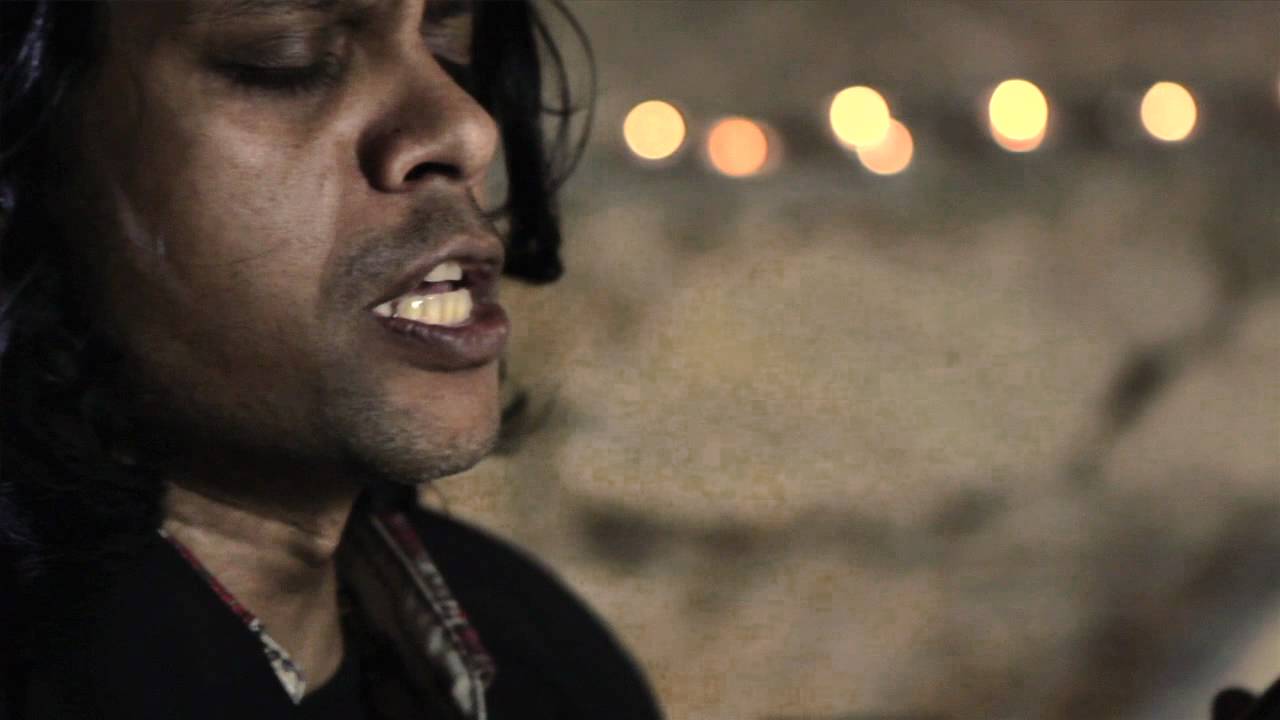
Watch our interview with Oliver Rajamani as he keeps Classical Indian Fusion's history alive and rocking! He talks to andaaz host Sarika about the Roma Culture and we get to see how flamenco dance can be fused with Kathak dance!
Like Andaaz on Facebook http://www.facebook.com/andaaztv?ref=ts
Follow Andaaz TV on Twitter
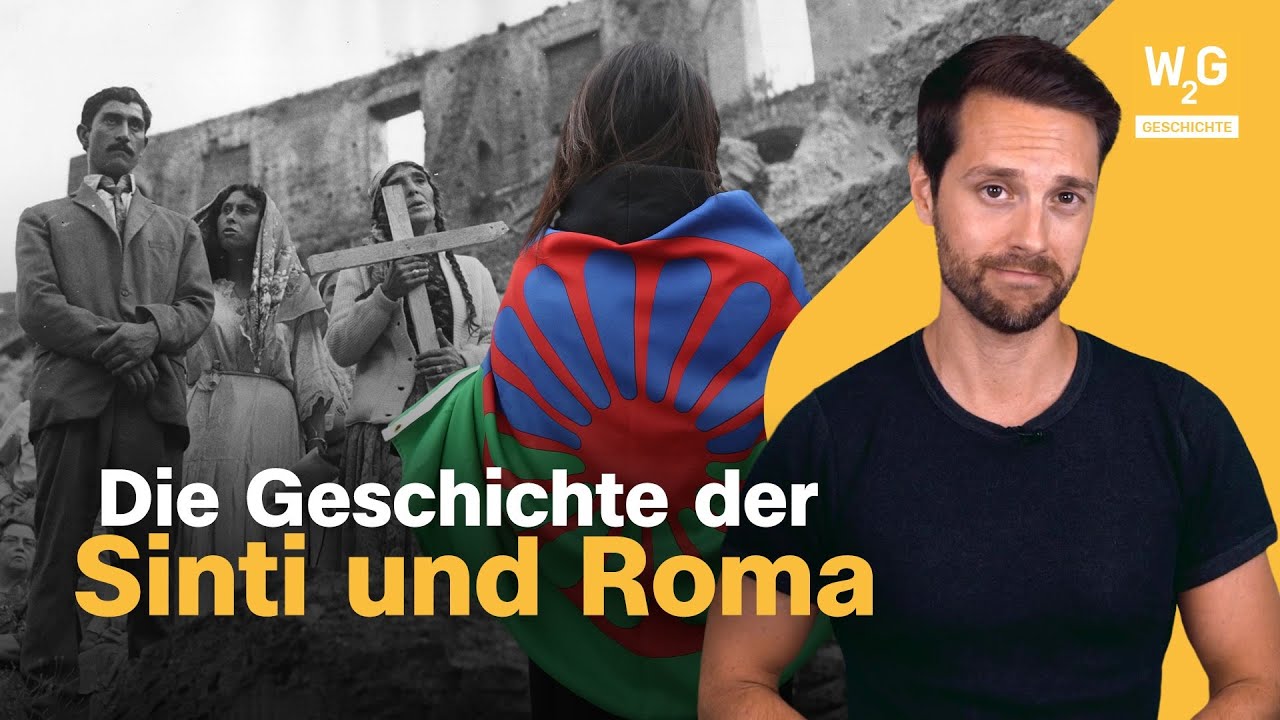
In der Geschichte leiden Sinti und Roma lange unter Vertreibung und Diskriminierung: In ganz Europa werden sie seit Jahrhunderten ausgegrenzt. Im Mittelalter dürfen sie sich nicht niederlassen und werden dann als „fahrendes Volk” stigmatisiert. Auch die Bezeichnung „Zigeuner” ist eine negativ konnotierte Fremdzuschreibung. Eng mit diesem Begriff verknüpft ist der Völkermord an den Sinti und Roma im Nationalsozialismus.
Noch immer kursieren Vorurteile und das Wissen über ihre Geschichte ist oft lückenhaft. Heute gelten Sinti und Roma zwar als eine anerkannte Minderheit in Deutschland, doch noch immer gibt es Verbrechen aus Antiziganismus. Was viele vergessen: Sinti und Roma prägen die Kultur in Deutschland und in ganz Europa entscheidend mit.
In diesem Video erklären wir euch, woher Sinti und Roma ursprünglich kommen, wie sie über Jahrhunderte ausgegrenzt werden und wieso ihre Geschichte eben doch weit mehr ist als die Erinnerung an Unterdrückung und Diskriminierung.
Kapitel:
00:00 Intro
01:34 Woher kommen Sinti und Roma?
04:22 Sinti und Roma in der Frühen Neuzeit
05:46 Rassismus und Völkermord
07:35 Mangelhafte Aufarbeitung
09:58 Sinti und Roma heute
Literatur:
https://www.bundestag.de/resou....rce/blob/410880/917c
https://www.bpb.de/internation....ales/europa/sinti-un
https://www.bpb.de/izpb/239954/sinti-und-roma
https://dip21.bundestag.de/dip....21/btd/19/281/192813
https://dip21.bundestag.de/dip....21/btd/19/269/192693
Karola Fings, Sinti und Roma, 2016.#
Oliver Mengersen (Hg.), Sinti und Roma, 2015.
Weitere Links:
Schau gerne bei Instagram vorbei: https://www.instagram.com/mrwi....ssen2gogeschichte/?h
Wir gehören zu #terraX und #funk
Schau da unbedingt rein:
Terra X: https://terra-x.zdf.de/#xtor=CS3-158
Terra X bei YouTube: https://www.youtube.com/channe....l/UCA3mpqm67CpJ13YfA
funk: https://www.funk.net/
funk bei Youtube: https://youtube.com/funkofficial
Web-App: https://go.funk.net
Eine Produktion der objektiv media GmbH für Terra X und funk:
Moderation: Mirko Drotschmann
Autor: Matthias Schöberl
Producer: Andreas Sommer
Redaktion (OM): Inga Haupt
Motion Design: Christian Wischnewski
Schnitt: Christian Wischnewski
ZDF: Kai Jostmeier, Johanna Kaack

“This lellum’s mangin is naggins tae (this land’s story is mine too)”.
We know that Travellers have been in Scotland since at least the 12th century. Since the medieval times, Scotland’s travelling communities have played a myriad of roles, including ballad singers, craftspeople and pearl fishers.
Travellers have been immortalised in art and literature and have contributed a lot to Scotland’s heritage.
But despite the important roles they’ve played throughout Scotland’s story, Travellers have often been pushed to the margins and have faced persecution. We rarely talk about their contributions and experiences to Scotland’s heritage.
Today many continue to travel Scotland’s roads, passing their culture and traditions to a new generation.
Watch as Nawken (Scottish Traveller) Davie Donaldson tells some of Scotland’s Traveller stories.

February 2005
After centuries of exclusion and persecution, a new initiative has been launched to help Roma communities break the cycle of desperate poverty.

(2 Jun 2017) Prague was alive with the sound of traditional Roma music on Friday as the annual Roma parade wound its way through the centre of the city.
The event was part of the Khamoro World Roma Festival in Prague.
The festival, now in its 19th year, celebrates the culture of the Roma people, an embattled minority who live in Europe.
Among other events during the weekend is an international conference on Roma culture, a football tournament and a gala concert.
Find out more about AP Archive: http://www.aparchive.com/HowWeWork
Twitter: https://twitter.com/AP_Archive
Facebook: https://www.facebook.com/APArchives
Instagram: https://www.instagram.com/APNews/
You can license this story through AP Archive: http://www.aparchive.com/metad....ata/youtube/57e5cd95

Dr Hristo Kyuchukov, Director of Roma Research Centre, University of Silesia, Poland, in conversation with Mark Kinra, geopolitical analyst at Lokmaanya, on Roma language, a unified Roma identity, challenges during the Covid-19 pandemic, and opportunities to study and research Roma culture.

They are known by many names: Gypsies, Travelers, and Roma, which is how they prefer to be known. Whatever you call them, Roma are among the most widely dispersed and yet the least understood ethnic groups on earth. VOA's Adam Phillips and Daniela Schrier filed this report on Romany culture and its influences in New York, where thousands of the world's estimated 12 million Roma make their home.

Hungary's last Roma fortune-teller fears his culture and traditions could disappear before his eyes. Most traditional Roma occupations are very much on the wane. Many in Hungary face racism, segregation, social exclusion and poverty. Here's a report.
#Hungary #FortuneTellers #WorldNews
About Channel:
WION -The World is One News, examines global issues with in-depth analysis. We provide much more than the news of the day. Our aim to empower people to explore their world. With our Global headquarters in New Delhi, we bring you news on the hour, by the hour. We deliver information that is not biased. We are journalists who are neutral to the core and non-partisan when it comes to the politics of the world. People are tired of biased reportage and we stand for a globalised united world. So for us the World is truly One.
Please keep discussions on this channel clean and respectful and refrain from using racist or sexist slurs as well as personal insults.
Subscribe to our channel at https://goo.gl/JfY3NI
Check out our website: http://www.wionews.com
Connect with us on our social media handles:
Facebook: https://www.facebook.com/WIONews
Twitter: https://twitter.com/WIONews
Follow us on Google News for latest updates
Zee News:- https://bit.ly/2Ac5G60
Zee Bussiness:- https://bit.ly/36vI2xa
DNA India:- https://bit.ly/2ZDuLRY
WION: https://bit.ly/3gnDb5J
Zee News Apps : https://bit.ly/ZeeNewsApps

[a]www.simonthacker.com%2Fsongs-of-the-roma[/a]
A new Romani musical journey by one of the UK's most accomplished musical figures, Scottish guitarist and composer Simon Thacker, featuring Polish cellist Justyna Jablonska and traditional Roma singer/violinist Masha Natanson.
Contrasting his vivid re-imagining of songs from the gypsy tradition with wonderfully inventive new instrumental music, Thacker draws on and extends European, Indian and Balkan folk forms, and of course flamenco, as well as reimagines traditional songs in Romani, Romanian, Serbian and Russian languages. Songs of the Roma premiered at the Edinburgh Festival Fringe in 2016 as part of the prestigious Made in Scotland showcase and a track features on Simon and Justyna's acclaimed 2017 Karmana album. http://[a]www.simonthacker.com%2Fshop.html[/a]
www.simonthacker.com
www.justynacello.co.uk
Videography by Stuart Edwards stuedwardsfilmmaker.com
Sound by Garry Boyle slateroomstudio.com

Gypsy. My world , my forest ... Evening of Polish Roma Culture. Phenjoripe! Berlin 2014, Gypsy Show!
24.10.2014r. - Meine Erde, mein Wald ...
Ein Abend der polnischen Roma-Kultur
film - Barbara Mácha
film editing - Anna Debicka
ROMANY DANCE SCHOOL
Roma Traditional Dance / Gipsy Show Dance
Katjusha Kozubek
Tel./Fax: +49 (0)30 364 413 34
Mobil: +49 (0)177 808 5524
E-Mail:kontakt@romanydanceschool.de
23. Oktober 2014, 19.00 Uhr, Werkstatt der Kulturen, Wissmannstrasse 34, Berlin-Neukölln
"Meine Erde, mein Wald..."
Ein Abend der polnischen Roma-Kultur
Das RDS Gipsy Art Trio „Phenjoripe“, eröffnen den Abend mit RomaShowSequenzen. Sie erinnern an die legendären russischen Roma Theater Aufführungen, deren Zauber auch die Bühnenkunst der polnischen Roma beeinflusste. Bis heute begeistern diese Darbietungen aus Tanztheater, Lied und Instrumentalmusik das Publikum und sind fester Bestandteil der polnischen Kulturlandschaft. Eingeflochten in diese farbenprächtige, lebensbejahende Show sind Gedichte von Polens berühmter Roma-Dichterin Bronisława Wajs („Papusza“) sowie Lieder der Polska und Russka Roma - dargeboten zur Gitarre von der polnischen Sängerin Dorota Szewczyk . Zum Abschluss wird der preisgekrönte polnische Spielfilm"Papusza" (2013), Regie: Joanna Kos-Krauze und Krzysztof Krauze, gezeigt. Dieses beeindruckende Filmwerk zeigt nicht nur den Lebens- und Leidensweg der empfindsamen Dichterin sondern zeichnet in ästhetisch schönen Bildern ein eindrucksvolles Sittengemälde der wandernden TieflandRoma von den 30-ger Jahren bis zu den 60-ger Jahren, der Zeit des "großen Halt".
Veranstalter:
„Kultur-Kooperative deutsch-polnischer Initiativen“ des Jungen Kreises der Deutsch-Polnischen Gesellschaft Berlin und
die Romany Dance School Berlin
Eine Veranstaltung in Kooperation mit der Stiftung für deutsch-polnische Zusammenarbeit und der Werkstatt der Kulturen

”Art is a tool to convey what really matters.” Romani artist Małgorzata Mirga-Tas uses art to reclaim and celebrate Roma history, identity, and memory. To her, art is a language and a means to change perceptions within her community.
“I focus on subjects connected to Roma culture, with identity, appropriation, and reclaiming memory, as well as notions of multiculturality and anti-Romani sentiment.” Małgorzata Mirga-Tas lives with her family in Czarna Góra, Poland. Her textile works function as a response to centuries of misrepresentation of Romani people. Mirga-Tas reinterprets history through bold, patterned fabrics and colourful compositions: “I don’t want to recount these traumatic situations using black, white, or gloomy colours. On the contrary: picking strong, patterned fabrics really matters to me, because every situation of this kind should be told in colour.”
From her studio near her home, she collaborates with a small team of women, friends and family, to bring her pieces to life: “Every time I enter my studio, I feel my life is really in place,” she says and continues: “Working with the community means working on our collective memory. Collaborative efforts challenge the stereotype of the Romani community.”
Through her art, Mirga-Tas often deal with traumatic stories of violence against Romani people, including the Holocaust. In the portrait series ‘Siukar Manusia’ Romani, Holocaust survivors are portrayed with bright colours on a dark, blue, velvet background: “There are stories that are traumatic and full of violence, and you wonder how to show them in the first place. I figured the easiest way was to show only what truly mattered,” she elaborates: “The story was about them.”
Her practice extends beyond making art; it’s also about community. Using art, Mirga-Tas bridges history and memory, giving voice to those long overlooked: “This is my mission statement: To show that we’re normal people,” Mirga-Tas says: “My art can act and change the discrimination, as can the art of other Romani artists, as I’m not the only one. Creating art and doing what I do is a part of who I am.”
Małgorzata Mirga-Tas (b. 1978, Zakopane, Poland) is a Polish-Romani artist who lives and works in Czarna Góra in southern Poland. Mirga-Tas is known for her textile collages, created with materials and fabrics gathered mainly from family and friends. A feminist perspective informs her visual storytelling and challenges stereotypical representations of Roma people. Often working in collaboration with other women, she sews pieces of clothing, handkerchiefs, tablecloths, curtains and sheets together to create vivid portraits and scenes from everyday life. Her works have been exhibited at the 42nd Biennial of Painting Bielska Jesień in 2015 (she received an honourable mention then), the 43rd Biennial of Painting Bielska Jesień in 2017, the 3rd Art Encounters Biennale in Timisoara in 2019, and the 11th Berlin Biennale in 2020. Mirga-Tas was the official Polish representative at the 59th Venice Biennale in 2022 – the first Roma artist to represent any country.
Małgorzata Mirga-Tas was interviewed by Roxanne Bagheshirin Lærkesen in her studio near Czarna Góra in February 2026, in connection with her exhibition Pani, so tradeł / Water that Wanders at Kunsthal Charlottenborg, Copenhagen, Denmark.
Camera: Jarl Therkelsen Kaldan & Rasmus Quistgaard
Edited and produced by Roxanne Bagheshirin Lærkesen
Music via Upright:
Flow Like Water by Celine Bostic and Matthew Ker
Little Memory by Kasper Kaae and Elise Rosenkrands
Ancient Ritual by Bradley Farmer
Copyright: Louisiana Channel, Louisiana Museum of Modern Art, 2026
Louisiana Channel is supported by Den A.P. Møllerske Støttefond.
Subscribe to our channel for more videos on art: https://www.youtube.com/thelouisianachannel
FOLLOW US HERE:
Website: http://channel.louisiana.dk
Instagram: http://www.instagram.com/louisianachannel
Facebook: https://www.facebook.com/LouisianaChannel

İŞTE SAFRANBOLU GÜMÜŞ KÜRTMAHALESİ NİN TARİHİ
Şeyhbızın Aşireti büyük bir aşirettir Temel ikametgahları Irak'ın Kerkük bölgesidir düğün eğlence.
Yavuz Sultan Selim Han Bağdat seferi sırasında ordusunu bir müddet Kerkük'te bekletmiştir
Murathanoğlu (Şeyhbızıni) Aşiretinin Yavuz Sultan Selim Han'a gösterdikleri sadakat ve yakınlık Han'ın
çok hoşuna gitmiştir. Bunun üzerine Sultan Selim aşiretin ileri gelenleri ile istişare ederek,
aşiretin burada kalmasını istemediğini söyleyerek, aşireti Anadolu'ya davet etmiştir.
Sultan Selim'in dindar çalışkan ve kendisine sadık olan aşireti daveti, aşiret tarafından kabul edilmiş
ve Murathanoğlu aşiretinden 450 hane Anadolu'ya göç etmiştir.
19 y sonuna kadar hakkari civarında bulunan Şeyhbızınnlar, daha sonra çeşitli bölegelere dağılmışlardır
(Hakkari, Van, Muş, Erzurum, Ankara-Haymana, SinopBoyabat,karabük safranbolu Amasya Samsun Adapazarı, Ağrı ve Malatya )
yalnız şuna dikkat etmemiz gerekmektedir, Şeyhbızınların dağıldığı bölgeler
Ermeniler 'in eskiden yaşadıkları topraklardır. Buralara yerleşimleri ise tarihteki Ermeni olaylarınd zafer
kazandıkları.bölkelerde kısım kısım osmanlı dagıtmıştır bilinçli olarak dağıtıldılar! toplu halde olmalılar büyük bir tehlike olarak görülmüş
Savaşcı özellikleriylen bilinen aşiretve bunu kanıtlayan cok ceşit osmanlı fermanı vardır
örneğin Ankara 'nın Haymana ilçesinin ismi Ermenice'den geldiği gibi
merkeze yakın köylerde eskiden Ermenilerin yaşadığı bilinmektedir.
tehlikesiz ve zararsiz hale getirilmiş bir nevi
Şexbızınlar'ın dili Hewramani ve Soranice'ye çok yakın bir dil olduğundan
kurmanca lehçesini konuşmakta güçlük çekerler
tabi ki çevre değişimi sonucunda, bu dilde de bazı gerilemeler olmuştur.
savaştaki zeka ve cesaretleri o kadar fazladır ki
ırak'ta kalan kesimi Şex Mahmut Berzenci nin ordusunda önemli roler üstlenmişlerdir.
günümüzde de mesut Barzani’ye bağlı peşmergeler arasında yüksek rütbelerde görev yapmaktadırlar.
dil olarak Hewramani (gorani), Sorani, Leki ve Dımili lehçelerine çok yakın bir konuşmaları vardır ki bu da
merkezi ve bölgede üstünlük sağlayan bir toplum olduklarının göstergesidir.
Aşiretin yaşadigi yerler
Ankara-Haymana
Ankara-Polatlı
Konya-Kulu
Çorum-Merkez
Çorum-Laçin
Çorum-Kargı
Çorum-Osmancık
Düzce-Merkez
Adapazarı-Akyazı
Amasya-Suluova
Amasya-Merzifon
Erzurum-Merkez
Erzurum-Narman
Erzurum-Oltu
Erzurum-Tortum
Karabük-Safranbolu
Karabük-Cumayanı
Sinop-Boyabat
Kastamonu-Araç
Tokat-Turhal
Yozgat Sorgun
Yozgat Saraykent
Yozgat Cekerek
Samsun-Bafra
Samsun-Havza
Van-Erciş
Şanlıurfa-Siverek
Bayburt
Iğdır-Aralık
Adıyaman/Kahta
Diyarbakır
Erzincan
Güney ve Dogu Kürdistandaki yaşadıkları yerler
Heneqin,Kerkûk,Xorasan,Raqqa Kirmansah,Beyzan. Israil
Yukarda,gördüğünüz gibi dağinik bir şekildeler.böylesi dağınık durumunda olan aşiret kendi inisiyetiflerinin dışında
bilinçli olarak dağıtıldılar! toplu halde olmalılar büyük bir tehlike olarak görülmüş
Savaşcı özellikleriylen bilinen aşiret tehlikesiz ve zararsiz hale getirilmiş bir nevi.!
Şeyhbızıni aşiret'in konuştuğu lehçeyede Şeyhbızıni lehçesi denilir
(konuştukları lehçenin eski Kürtçe olduguda soylenir) zaten Kürtçe çok zengin bir dil
Bazı aşiretlerde eski Kürtçe kelimeler hala korunmuştur Şeyhbızın aşiretinde bu zenginlik günümüze kadar
muhavaza edilmiştir.Konuştuklari lehçe Güney ve Doğu Kürdistandaki lehçelere yakinlik göstermektedir
Aşiretin diger özellikleride başlica şunlardir
Cok zeki ve savaşçi ruhlular; Osmanlı arşivlerinde ve bazi yabanci araştırmacıların kaynaklarına göre
"kendi yapımları olan tufekler geçer" Martini tüfeğine benzer mukemmel bir çeşit Martini tüğfeğini kendileri yapıyorlarmiş
Dikkat Çekici bir başka özellikleri ise kendileriylen cok rahat dalga geçebilen espiri anlayışları cok geniş,
şakacıdırlar.Ayrıca aşirette çokca sarışın ve renkli gözlü insanlara rastlanır.
Osmanlı döneminde vergi ödemeyi kabul etmediklerinden dolayı, baskılar sonucunda yönetime karşıi direnmeyi seçmişler
osmanlı onlarla anlaşmaya gecmek zorunda kalmıs.Aşiretin elinde
üç adet "ferman" bulunmakta.(1170/1756)tarihli(1194/1780)tarihli(1231/1815) üç tarihte degişik zamanlarda
Osmanlı ile yapmış oldukları anlaşma geregi vergi alınmıyacak diye belgeler verilmiş.
fermanların orjinali (Dünden Bugüne yenice Şeyhbızın nlar kitabında)
Şeyhbızınlı aşiret'inden bazı tanınmış simalar.
Bülent ULUSU( eski Başbakan)
Avni AKYOL(eski milli eğitim,bakanı)
Bedrettin DALAN( politikacı)
Prof.Dr.Ohan CEKER(eğitim uyesi)
Selahattin DUMAN(gazeteci yazar)
Ahmet TURGUT(Kürt AHMET iş adamı..)
Orhan SAKARYA (politikacı)Hatice Yaşar( siyasetci)
Dr.Derviş TANSU(eski altındağ belediye başkanı)
Galip KORKMAZ( boksör,bir türkiye şampiyonluğu 7 ankara sampiyonluğu onlarca derecesi bulunmakta)
Mustafa TEKiN( güreş,birçok kez ankara birinciligi ve dünya yıldızlar şampiyonasında,dünya şampiyonu)
gökhan kandemir sanatcı
Yukardaki isimler aşiretten taninan sadece bazilari
EĞLENCELİ BİR OTELDE DÜĞÜN
wedding dance
roman havası
girls dance
great dance fun turkey safranbolu

İŞTE SAFRANBOLU GÜMÜŞ KÜRTMAHALESİ NİN TARİHİ
Şeyhbızın Aşireti büyük bir aşirettir Temel ikametgahları Irak'ın Kerkük bölgesidir
Yavuz Sultan Selim Han Bağdat seferi sırasında ordusunu bir müddet Kerkük'te bekletmiştir.
Murathanoğlu (Şeyhbızıni) Aşiretinin Yavuz Sultan Selim Han'a gösterdikleri sadakat ve yakınlık Han'ın
çok hoşuna gitmiştir. Bunun üzerine Sultan Selim aşiretin ileri gelenleri ile istişare ederek,
aşiretin burada kalmasını istemediğini söyleyerek, aşireti Anadolu'ya davet etmiştir.
Sultan Selim'in dindar çalışkan ve kendisine sadık olan aşireti daveti, aşiret tarafından kabul edilmiş
ve Murathanoğlu aşiretinden 450 hane Anadolu'ya göç etmiştir.
19 y sonuna kadar hakkari civarında bulunan Şeyhbızınnlar, daha sonra çeşitli bölegelere dağılmışlardır
(Hakkari, Van, Muş, Erzurum, Ankara-Haymana, SinopBoyabat,karabük safranbolu Amasya Samsun Adapazarı, Ağrı ve Malatya )
yalnız şuna dikkat etmemiz gerekmektedir, Şeyhbızınların dağıldığı bölgeler
Ermeniler 'in eskiden yaşadıkları topraklardır. Buralara yerleşimleri ise tarihteki Ermeni olaylarınd zafer
kazandıkları.bölkelerde kısım kısım osmanlı dagıtmıştır bilinçli olarak dağıtıldılar! toplu halde olmalılar büyük bir tehlike olarak görülmüş
Savaşcı özellikleriylen bilinen aşiretve bunu kanıtlayan cok ceşit osmanlı fermanı vardır
örneğin Ankara 'nın Haymana ilçesinin ismi Ermenice'den geldiği gibi
merkeze yakın köylerde eskiden Ermenilerin yaşadığı bilinmektedir.
tehlikesiz ve zararsiz hale getirilmiş bir nevi
Şexbızınlar'ın dili Hewramani ve Soranice'ye çok yakın bir dil olduğundan
kurmanca lehçesini konuşmakta güçlük çekerler
tabi ki çevre değişimi sonucunda, bu dilde de bazı gerilemeler olmuştur.
savaştaki zeka ve cesaretleri o kadar fazladır ki
ırak'ta kalan kesimi Şex Mahmut Berzenci nin ordusunda önemli roler üstlenmişlerdir.
günümüzde de mesut Barzani’ye bağlı peşmergeler arasında yüksek rütbelerde görev yapmaktadırlar.
dil olarak Hewramani (gorani), Sorani, Leki ve Dımili lehçelerine çok yakın bir konuşmaları vardır ki bu da
merkezi ve bölgede üstünlük sağlayan bir toplum olduklarının göstergesidir.
Aşiretin yaşadigi yerler
Ankara-Haymana
Ankara-Polatlı
Konya-Kulu
Çorum-Merkez
Çorum-Laçin
Çorum-Kargı
Çorum-Osmancık
Düzce-Merkez
Adapazarı-Akyazı
Amasya-Suluova
Amasya-Merzifon
Erzurum-Merkez
Erzurum-Narman
Erzurum-Oltu
Erzurum-Tortum
Karabük-Safranbolu
Karabük-Cumayanı
Sinop-Boyabat
Kastamonu-Araç
Tokat-Turhal
Yozgat Sorgun
Yozgat Saraykent
Yozgat Cekerek
Samsun-Bafra
Samsun-Havza
Van-Erciş
Şanlıurfa-Siverek
Bayburt
Iğdır-Aralık
Adıyaman/Kahta
Diyarbakır
Erzincan
Güney ve Dogu Kürdistandaki yaşadıkları yerler
Heneqin,Kerkûk,Xorasan,Raqqa Kirmansah,Beyzan. Israil
Yukarda,gördüğünüz gibi dağinik bir şekildeler.böylesi dağınık durumunda olan aşiret kendi inisiyetiflerinin dışında
bilinçli olarak dağıtıldılar! toplu halde olmalılar büyük bir tehlike olarak görülmüş
Savaşcı özellikleriylen bilinen aşiret tehlikesiz ve zararsiz hale getirilmiş bir nevi.!
Şeyhbızıni aşiret'in konuştuğu lehçeyede Şeyhbızıni lehçesi denilir
(konuştukları lehçenin eski Kürtçe olduguda soylenir) zaten Kürtçe çok zengin bir dil
Bazı aşiretlerde eski Kürtçe kelimeler hala korunmuştur Şeyhbızın aşiretinde bu zenginlik günümüze kadar
muhavaza edilmiştir.Konuştuklari lehçe Güney ve Doğu Kürdistandaki lehçelere yakinlik göstermektedir
Aşiretin diger özellikleride başlica şunlardir
Cok zeki ve savaşçi ruhlular; Osmanlı arşivlerinde ve bazi yabanci araştırmacıların kaynaklarına göre
"kendi yapımları olan tufekler geçer" Martini tüfeğine benzer mukemmel bir çeşit Martini tüğfeğini kendileri yapıyorlarmiş
Dikkat Çekici bir başka özellikleri ise kendileriylen cok rahat dalga geçebilen espiri anlayışları cok geniş,
şakacıdırlar.Ayrıca aşirette çokca sarışın ve renkli gözlü insanlara rastlanır.
Osmanlı döneminde vergi ödemeyi kabul etmediklerinden dolayı, baskılar sonucunda yönetime karşıi direnmeyi seçmişler
osmanlı onlarla anlaşmaya gecmek zorunda kalmıs.Aşiretin elinde
üç adet "ferman" bulunmakta.(1170/1756)tarihli(1194/1780)tarihli(1231/1815) üç tarihte degişik zamanlarda
Osmanlı ile yapmış oldukları anlaşma geregi vergi alınmıyacak diye belgeler verilmiş.
fermanların orjinali (Dünden Bugüne yenice Şeyhbızın nlar kitabında)
Şeyhbızınlı aşiret'inden bazı tanınmış simalar.
Bülent ULUSU( eski Başbakan)
Avni AKYOL(eski milli eğitim,bakanı)
Bedrettin DALAN( politikacı)
Prof.Dr.Ohan CEKER(eğitim uyesi)
Selahattin DUMAN(gazeteci yazar)
Ahmet TURGUT(Kürt AHMET iş adamı..)
Orhan SAKARYA (politikacı)Hatice Yaşar( siyasetci)
Dr.Derviş TANSU(eski altındağ belediye başkanı)
Galip KORKMAZ( boksör,bir türkiye şampiyonluğu 7 ankara sampiyonluğu onlarca derecesi bulunmakta)
Mustafa TEKiN( güreş,birçok kez ankara birinciligi ve dünya yıldızlar şampiyonasında,dünya şampiyonu)
gökhan kandemir sanatcı
Yukardaki isimler aşiretten taninan sadece bazilari
EĞLENCELİ BİR OTELDE DÜĞÜN
wedding dance
roman havası
girls dance
great dance fun turkey safranbolu

İŞTE SAFRANBOLU GÜMÜŞ KÜRTMAHALESİ NİN TARİHİ
Şeyhbızınlı Aşireti büyük bir aşirettir Temel ikametgahları Irak'ın Kerkük bölgesidir.
Yavuz Sultan Selim Han Bağdat seferi sırasında ordusunu bir müddet Kerkük'te bekletmiştir.
Murathanoğlu (Şeyhbızıni) Aşiretinin Yavuz Sultan Selim Han'a gösterdikleri sadakat ve yakınlık Han'ın
çok hoşuna gitmiştir. Bunun üzerine Sultan Selim aşiretin ileri gelenleri ile istişare ederek,
aşiretin burada kalmasını istemediğini söyleyerek, aşireti Anadolu'ya davet etmiştir.
Sultan Selim'in dindar çalışkan ve kendisine sadık olan aşireti daveti, aşiret tarafından kabul edilmiş,
ve Murathanoğlu aşiretinden 450 hane Anadolu'ya göç etmiştir.
19 y sonuna kadar hakkari civarında bulunan Şeyhbızınnlar, daha sonra çeşitli bölegelere dağılmışlardır
(Hakkari, Van, Muş, Erzurum, Ankara-Haymana, SinopBoyabat,karabük safranbolu Amasya Samsun Adapazarı, Ağrı ve Malatya )
yalnız şuna dikkat etmemiz gerekmektedir, Şeyhbızınların dağıldığı bölgeler
Ermeniler 'in eskiden yaşadıkları topraklardır. Buralara yerleşimleri ise tarihteki Ermeni olaylarınd zafer
kazandıkları.bölkelerde. kısım kısım osmanlı dagıtmıştır bilinçli olarak dağıtıldılar! toplu halde olmalılar büyük bir tehlike olarak görülmüş.
Savaşcı özellikleriylen bilinen aşiretve bunu kanıtlayan cok ceşit osmanlı fermanı vardır
örneğin Ankara 'nın Haymana ilçesinin ismi Ermenice'den geldiği gibi
merkeze yakın köylerde eskiden Ermenilerin yaşadığı bilinmektedir.
tehlikesiz ve zararsiz hale getirilmiş bir nevi
Şexbızınlar'ın dili Hewramani ve Soranice'ye çok yakın bir dil olduğundan
kurmanca lehçesini konuşmakta güçlük çekerler.
tabi ki çevre değişimi sonucunda, bu dilde de bazı gerilemeler olmuştur.
savaştaki zeka ve cesaretleri o kadar fazladır ki,
ırak'ta kalan kesimi Şex Mahmut Berzenci nin ordusunda önemli roler üstlenmişlerdir.
günümüzde de mesut Barzani’ye bağlı peşmergeler arasında yüksek rütbelerde görev yapmaktadırlar.
dil olarak Hewramani (gorani), Sorani, Leki ve Dımili lehçelerine çok yakın bir konuşmaları vardır ki bu da
merkezi ve bölgede üstünlük sağlayan bir toplum olduklarının göstergesidir.
Aşiretin yaşadigi yerler.
Ankara-Haymana
Ankara-Polatlı
Konya-Kulu
Çorum-Merkez
Çorum-Laçin
Çorum-Kargı
Çorum-Osmancık
Düzce-Merkez
Adapazarı-Akyazı
Amasya-Suluova
Amasya-Merzifon
Erzurum-Merkez
Erzurum-Narman
Erzurum-Oltu
Erzurum-Tortum
Karabük-Safranbolu
Karabük-Cumayanı
Sinop-Boyabat
Kastamonu-Araç
Tokat-Turhal
Yozgat Sorgun
Yozgat Saraykent
Yozgat Cekerek
Samsun-Bafra
Samsun-Havza
Van-Erciş
Şanlıurfa-Siverek
Bayburt
Iğdır-Aralık
Adıyaman/Kahta
Diyarbakır
Erzincan
Güney ve Dogu Kürdistandaki yaşadıkları yerler
Heneqin,Kerkûk,Xorasan,Raqqa Kirmansah,Beyzan. Israil
Yukarda,gördüğünüz gibi dağinik bir şekildeler.böylesi dağınık durumunda olan aşiret kendi inisiyetiflerinin dışında
bilinçli olarak dağıtıldılar! toplu halde olmalılar büyük bir tehlike olarak görülmüş.
Savaşcı özellikleriylen bilinen aşiret tehlikesiz ve zararsiz hale getirilmiş bir nevi.!
Şeyhbızıni aşiret'in konuştuğu lehçeyede Şeyhbızıni lehçesi denilir.
(konuştukları lehçenin eski Kürtçe olduguda soylenir) zaten Kürtçe çok zengin bir dil
Bazı aşiretlerde eski Kürtçe kelimeler hala korunmuştur Şeyhbızın aşiretinde bu zenginlik günümüze kadar
muhavaza edilmiştir.Konuştuklari lehçe Güney ve Doğu Kürdistandaki lehçelere yakinlik göstermektedir
Aşiretin diger özellikleride başlica şunlardir
Cok zeki ve savaşçi ruhlular; Osmanlı arşivlerinde ve bazi yabanci araştırmacıların kaynaklarına göre
"kendi yapımları olan tufekler geçer" Martini tüfeğine benzer mukemmel bir çeşit Martini tüğfeğini kendileri yapıyorlarmiş
Dikkat Çekici bir başka özellikleri ise kendileriylen cok rahat dalga geçebilen espiri anlayışları cok geniş,
şakacıdırlar.Ayrıca aşirette çokca sarışın ve renkli gözlü insanlara rastlanır.
Osmanlı döneminde vergi ödemeyi kabul etmediklerinden dolayı, baskılar sonucunda yönetime karşıi direnmeyi seçmişler.
osmanlı onlarla anlaşmaya gecmek zorunda kalmıs.Aşiretin elinde
üç adet "ferman" bulunmakta.(1170/1756)tarihli(1194/1780)tarihli(1231/1815) üç tarihte degişik zamanlarda
Osmanlı ile yapmış oldukları anlaşma geregi vergi alınmıyacak diye belgeler verilmiş.
fermanların orjinali (Dünden Bugüne yenice Şeyhbızın nlar kitabında)
Şeyhbızınlı aşiret'inden bazı tanınmış simalar.
Bülent ULUSU( eski Başbakan)
Avni AKYOL(eski milli eğitim,bakanı)
Bedrettin DALAN( politikacı)
Prof.Dr.Ohan CEKER(eğitim uyesi)
Selahattin DUMAN(gazeteci yazar)
Ahmet TURGUT(Kürt AHMET iş adamı..)
Orhan SAKARYA (politikacı)Hatice Yaşar( siyasetci)
Dr.Derviş TANSU(eski altındağ belediye başkanı)
Galip KORKMAZ( boksör,bir türkiye şampiyonluğu 7 ankara sampiyonluğu onlarca derecesi bulunmakta)
Mustafa TEKiN( güreş,birçok kez ankara birinciligi ve dünya yıldızlar şampiyonasında,dünya şampiyonu)
gökhan kandemir sanatcı
Yukardaki isimler aşiretten taninan sadece bazilari
EĞLENCELİ BİR OTELDE DÜĞÜN
wedding dance
roman havası
girls dance
Mariage amusant
oyun havsı.

İŞTE SAFRANBOLU GÜMÜŞ KÜRTMAHALESİ NİN TARİHİ
Şeyhbızın Aşireti büyük bir aşirettir Temel ikametgahları Irak'ın Kerkük bölgesidir düğün eğlence.
Yavuz Sultan Selim Han Bağdat seferi sırasında ordusunu bir müddet Kerkük'te bekletmiştir
Murathanoğlu (Şeyhbızıni) Aşiretinin Yavuz Sultan Selim Han'a gösterdikleri sadakat ve yakınlık Han'ın
çok hoşuna gitmiştir. Bunun üzerine Sultan Selim aşiretin ileri gelenleri ile istişare ederek,
aşiretin burada kalmasını istemediğini söyleyerek, aşireti Anadolu'ya davet etmiştir.
Sultan Selim'in dindar çalışkan ve kendisine sadık olan aşireti daveti, aşiret tarafından kabul edilmiş
ve Murathanoğlu aşiretinden 450 hane Anadolu'ya göç etmiştir.
19 y sonuna kadar hakkari civarında bulunan Şeyhbızınnlar, daha sonra çeşitli bölegelere dağılmışlardır
(Hakkari, Van, Muş, Erzurum, Ankara-Haymana, SinopBoyabat,karabük safranbolu Amasya Samsun Adapazarı, Ağrı ve Malatya )
yalnız şuna dikkat etmemiz gerekmektedir, Şeyhbızınların dağıldığı bölgeler
Ermeniler 'in eskiden yaşadıkları topraklardır. Buralara yerleşimleri ise tarihteki Ermeni olaylarınd zafer
kazandıkları.bölkelerde kısım kısım osmanlı dagıtmıştır bilinçli olarak dağıtıldılar! toplu halde olmalılar büyük bir tehlike olarak görülmüş
Savaşcı özellikleriylen bilinen aşiretve bunu kanıtlayan cok ceşit osmanlı fermanı vardır
örneğin Ankara 'nın Haymana ilçesinin ismi Ermenice'den geldiği gibi
merkeze yakın köylerde eskiden Ermenilerin yaşadığı bilinmektedir.
tehlikesiz ve zararsiz hale getirilmiş bir nevi
Şexbızınlar'ın dili Hewramani ve Soranice'ye çok yakın bir dil olduğundan
kurmanca lehçesini konuşmakta güçlük çekerler
tabi ki çevre değişimi sonucunda, bu dilde de bazı gerilemeler olmuştur.
savaştaki zeka ve cesaretleri o kadar fazladır ki
ırak'ta kalan kesimi Şex Mahmut Berzenci nin ordusunda önemli roler üstlenmişlerdir.
günümüzde de mesut Barzani’ye bağlı peşmergeler arasında yüksek rütbelerde görev yapmaktadırlar.
dil olarak Hewramani (gorani), Sorani, Leki ve Dımili lehçelerine çok yakın bir konuşmaları vardır ki bu da
merkezi ve bölgede üstünlük sağlayan bir toplum olduklarının göstergesidir.
Aşiretin yaşadigi yerler
Ankara-Haymana
Ankara-Polatlı
Konya-Kulu
Çorum-Merkez
Çorum-Laçin
Çorum-Kargı
Çorum-Osmancık
Düzce-Merkez
Adapazarı-Akyazı
Amasya-Suluova
Amasya-Merzifon
Erzurum-Merkez
Erzurum-Narman
Erzurum-Oltu
Erzurum-Tortum
Karabük-Safranbolu
Karabük-Cumayanı
Sinop-Boyabat
Kastamonu-Araç
Tokat-Turhal
Yozgat Sorgun
Yozgat Saraykent
Yozgat Cekerek
Samsun-Bafra
Samsun-Havza
Van-Erciş
Şanlıurfa-Siverek
Bayburt
Iğdır-Aralık
Adıyaman/Kahta
Diyarbakır
Erzincan
Güney ve Dogu Kürdistandaki yaşadıkları yerler
Heneqin,Kerkûk,Xorasan,Raqqa Kirmansah,Beyzan. Israil
Yukarda,gördüğünüz gibi dağinik bir şekildeler.böylesi dağınık durumunda olan aşiret kendi inisiyetiflerinin dışında
bilinçli olarak dağıtıldılar! toplu halde olmalılar büyük bir tehlike olarak görülmüş
Savaşcı özellikleriylen bilinen aşiret tehlikesiz ve zararsiz hale getirilmiş bir nevi.!
Şeyhbızıni aşiret'in konuştuğu lehçeyede Şeyhbızıni lehçesi denilir
(konuştukları lehçenin eski Kürtçe olduguda soylenir) zaten Kürtçe çok zengin bir dil
Bazı aşiretlerde eski Kürtçe kelimeler hala korunmuştur Şeyhbızın aşiretinde bu zenginlik günümüze kadar
muhavaza edilmiştir.Konuştuklari lehçe Güney ve Doğu Kürdistandaki lehçelere yakinlik göstermektedir
Aşiretin diger özellikleride başlica şunlardir
Cok zeki ve savaşçi ruhlular; Osmanlı arşivlerinde ve bazi yabanci araştırmacıların kaynaklarına göre
"kendi yapımları olan tufekler geçer" Martini tüfeğine benzer mukemmel bir çeşit Martini tüğfeğini kendileri yapıyorlarmiş
Dikkat Çekici bir başka özellikleri ise kendileriylen cok rahat dalga geçebilen espiri anlayışları cok geniş,
şakacıdırlar.Ayrıca aşirette çokca sarışın ve renkli gözlü insanlara rastlanır.
Osmanlı döneminde vergi ödemeyi kabul etmediklerinden dolayı, baskılar sonucunda yönetime karşıi direnmeyi seçmişler
osmanlı onlarla anlaşmaya gecmek zorunda kalmıs.Aşiretin elinde
üç adet "ferman" bulunmakta.(1170/1756)tarihli(1194/1780)tarihli(1231/1815) üç tarihte degişik zamanlarda
Osmanlı ile yapmış oldukları anlaşma geregi vergi alınmıyacak diye belgeler verilmiş.
fermanların orjinali (Dünden Bugüne yenice Şeyhbızın nlar kitabında)
Şeyhbızınlı aşiret'inden bazı tanınmış simalar.
Bülent ULUSU( eski Başbakan)
Avni AKYOL(eski milli eğitim,bakanı)
Bedrettin DALAN( politikacı)
Prof.Dr.Ohan CEKER(eğitim uyesi)
Selahattin DUMAN(gazeteci yazar)
Ahmet TURGUT(Kürt AHMET iş adamı..)
Orhan SAKARYA (politikacı)Hatice Yaşar( siyasetci)
Dr.Derviş TANSU(eski altındağ belediye başkanı)
Galip KORKMAZ( boksör,bir türkiye şampiyonluğu 7 ankara sampiyonluğu onlarca derecesi bulunmakta)
Mustafa TEKiN( güreş,birçok kez ankara birinciligi ve dünya yıldızlar şampiyonasında,dünya şampiyonu)
gökhan kandemir sanatcı
Yukardaki isimler aşiretten taninan sadece bazilari
EĞLENCELİ BİR OTELDE DÜĞÜN
wedding dance
roman havası
girls dance
great dance fun turkey safranbolu

 English
 Dutch
Dutch French
 German
 Russian
 Spanish
 Turkish
 Croatian
 Italian
 Swedish
 Danish
 Greek
Greek Albanian
 Romanian
 Bulgarian